
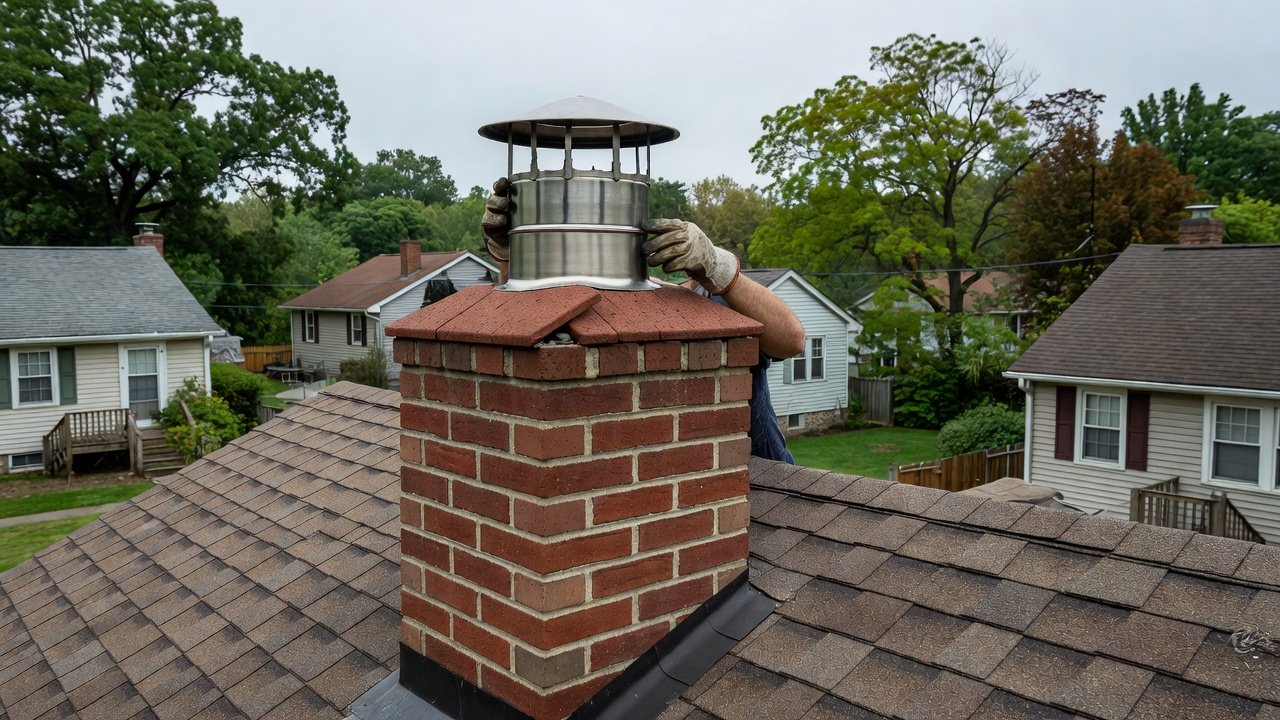
Smart Chimney Cap Installation Roselle NJ: 2026 Guide for Linden Residents
Most chimney problems we diagnose in Linden start the same way with no cap at all, or one that rusted through and got ignored for a season too long. Chimney cap installation in Roselle NJ and across Union County is one of the most straightforward protective measures a homeowner can take, but we still get calls every spring from people in Linden’s Tremley Point neighborhood and over on Wood Avenue dealing with water-stained fireboxes and rusted dampers that a $150 cap would have prevented three years ago.
Last fall, a homeowner on Dill Avenue in Linden called us after her gas fireplace started producing a mildew smell. When we got on the roof, the original galvanized steel cap had corroded completely at the base it was sitting loose, letting rain funnel straight down the flue. She assumed the smell was the appliance itself. It wasn’t. It was a saturated clay tile liner and a damper plate that had started to rust out. The cap replacement took us about forty minutes. The liner repair that followed took considerably longer and cost considerably more.
That story is not unusual. And it raises a fair question: could she have caught and fixed the cap herself before it became a bigger job? In some cases, yes. Here is an honest look at what chimney cap work costs, what you can handle on your own, and when it genuinely makes sense to call us.
What Chimney Cap Installation Actually Costs in 2026
In Union County right now, a standard single-flue chimney cap professionally supplied and installed runs roughly $175 to $350 for most Linden, Roselle, and Roselle Park homes. That range covers a quality stainless steel cap on a straightforward single-story or two-story roofline with standard pitch. Prices climb when the job gets more complicated, and they can climb fast.
The main cost drivers we see:
- Roof pitch and height — a steep roof on a three-story home in Elizabeth or a tall colonial on Stiles Street in Linden requires more safety equipment and more time
- Multi-flue caps — if you have two or three flue openings sharing one chimney crown, a multi-flue cap runs $250 to $500 depending on size and material
- Material choice — galvanized steel is cheapest but rarely lasts more than eight to ten years in New Jersey weather; stainless steel is the standard we recommend; copper is the premium option and runs two to three times more
- Crown damage found during installation — if we get up there and find cracked mortar crown or spalling brick around the flue tile, that adds repair time before a new cap can be properly seated
- Custom sizing — older homes in Linden and Cranford sometimes have non-standard flue dimensions that require a fabricated cap rather than an off-the-shelf fit
If you are pricing this out yourself at a hardware store, a decent stainless cap for a standard six-by-six or eight-by-eight flue runs $40 to $90 in materials. That is the honest number.
Chimney Cap Installation Roselle NJ: What a Capable Homeowner Can Safely Handle
We are not going to tell you that every chimney job requires a professional. That is not true and it is not helpful. Here is what a reasonably handy homeowner with roof comfort and the right tools can genuinely manage:
- Replacing a like-for-like cap on a low-slope roof with safe ladder access
- Cleaning debris out of an existing cap mesh before deciding whether to replace it
- Visually inspecting a cap from the roofline or from ground level with binoculars to check for obvious corrosion, mesh damage, or dislodged seating
- Measuring your flue opening accurately so you purchase the right size cap
- Applying a quality chimney crown sealant to minor surface cracks yourself if the crown is otherwise solid
The National Chimney Sweep Guild (NCSG) estimates that a professionally installed chimney cap can reduce moisture intrusion, animal entry, and downdraft issues, extending chimney life by years and reducing long-term repair costs. That outcome applies whether a pro installs it or you do as long as it is the right cap, correctly sized, and properly secured.
When You Should Call a Pro Instead
There are real reasons to hand this job off, and none of them are about protecting our business. They are about your safety, your roof, and your long-term costs.
Call us when:
- Your roof pitch is steep or your chimney sits at a valley — a slip on a Union County rooftop is a serious fall, not a minor inconvenience
- You find soft, crumbling mortar crown when you get up there — installing a cap over a failing crown traps water against damaged masonry and accelerates the deterioration
- You are not sure which flue opening serves which appliance — improperly capping an active gas or oil flue creates a carbon monoxide hazard inside the home
- Your cap keeps blowing off or keeps letting animals in — that usually signals a sizing or crown fit issue that needs a proper measurement and sometimes a custom fabrication
- Your home is in a historic district — parts of Cranford and Westfield have local code requirements about visible rooftop modifications, and getting it wrong creates a headache at resale
According to the Consumer Product Safety Commission (CPSC), carbon monoxide poisoning from blocked or damaged chimneys sends thousands of Americans to emergency rooms each year. A misidentified or improperly capped flue is one of the ways that happens. That is the real reason we flag flue identification as a professional task, not because the installation itself is complicated.
The U.S. Fire Administration (USFA) also notes that heating fires peak in December and January. In New Jersey, that means the worst outcomes from neglected chimneys happen right when families are using their systems the most. Getting a cap inspected or replaced before November matters.
The Concrete Risk of Getting It Wrong
A cap that is the wrong size or improperly attached will seat unevenly against the flue tile. Water gets in at the gap. Over one or two winters, that moisture cycles through freezing and thawing inside the flue liner — a process that cracks clay tiles from the inside. By the time you smell something off or see a stain on your ceiling, you may be looking at a partial liner replacement. In Linden and Rahway, where a lot of the housing stock dates from the 1940s through the 1960s, those original clay tile liners are already near the end of their service life. A loose cap speeds that timeline up significantly.
According to the National Fire Protection Association (NFPA 211), chimneys, fireplaces, and vents should be inspected at least once per year and cleaned when necessary to reduce fire risk. That annual inspection is also the right moment to confirm your cap is doing its job.
Frequently Asked Questions
How much does chimney cap installation cost in Linden, NJ in 2026?
Most single-flue cap installations in Linden and the surrounding Union County area run between $175 and $350 when professionally supplied and installed. The price goes up if your roof has a steep pitch, if you need a multi-flue or custom-sized cap, or if crown damage is found during the job. The cap material itself — stainless steel versus galvanized versus copper is also a meaningful cost variable. If you are buying a cap and installing it yourself on a straightforward roofline, materials alone typically run $40 to $90.
Can I install a chimney cap myself, or do I need a professional?
A confident homeowner with safe roof access can replace a like-for-like cap on a low-slope roof. The main reasons to call a professional are steep or high rooflines, uncertainty about which flue serves which appliance, visible crown damage that needs repair before the cap seats properly, or a cap that keeps failing — which often points to a fit or sizing issue. Getting flue identification wrong on a gas or oil heating system is a carbon monoxide risk, and that is not a job to guess at.
What happens if I leave my chimney without a cap in New Jersey weather?
Rain and snowmelt enter the flue and saturate the liner, damper, and firebox. In New Jersey’s freeze-thaw cycle, that moisture expands inside clay tile liners and cracks them from the inside — often without visible symptoms until the damage is significant. You also risk animals nesting in the flue, which can block ventilation entirely. A missing or failed cap is one of the most common reasons we see accelerated chimney deterioration in Linden, Rahway, and Roselle homes, and it is almost always the least expensive problem to fix before it becomes a more expensive one.
Talk to Our Team Before You Decide
If you are a Linden homeowner or anywhere in Union County from Kenilworth down to Clark and you are trying to figure out whether this is a weekend project or a call-us situation, we are genuinely happy to help you think it through. We serve Linden, Roselle, Roselle Park, Elizabeth, Rahway, and the surrounding communities, and we have been on enough rooftops in this area to give you a straight answer about what your chimney actually needs.
Reach out to Roselle Chimney to schedule an inspection or get a cap installation quote. No pressure if it is something you can handle yourself; we will tell you that too.
Pingback: Reliable Chimney Sweep Near Linden NJ: 2026 Guide for Linden Residents – Roselle Chimney
Pingback: Smart Chimney Cap Installation Roselle NJ: 2026 Cost Guide for Clark Residents – Roselle Chimney