
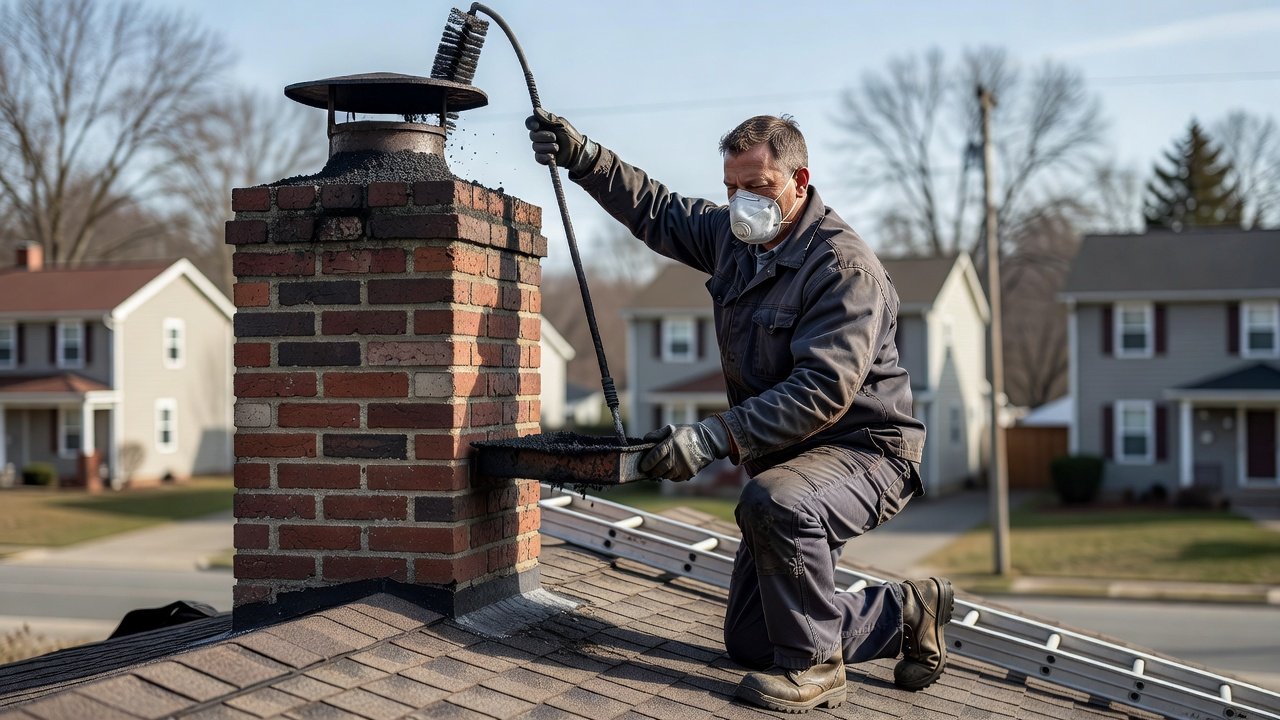
Reliable Chimney Sweep Near Linden NJ: 2026 Guide for Linden Residents
Most Linden homeowners ask us two questions before they do anything else: how much does a chimney sweep cost, and do I actually need a professional? Those are fair questions. A standard chimney cleaning in Union County runs between $150 and $300 depending on flue size, access, and how long it has been since the last service. What you spend on a pro now is almost always less than what you spend repairing a flue fire or a cracked liner later.
We are Roselle Chimney, and we have been servicing chimneys across Union County for years including a steady number of calls from Linden, Roselle, Elizabeth, Rahway, and Clark. When someone searches for a chimney sweep near Linden NJ, we want them to find honest information, not a sales pitch dressed up as advice. This guide walks you through what you can reasonably handle on your own, and where the work genuinely needs a trained eye and the right equipment.
Last November, a homeowner on Dill Avenue in Linden called us after noticing a faint smoke smell drifting through the first floor every time she lit a fire. She had already bought a chimney cleaning kit at a hardware store and swept the flue herself once before. The smell persisted. When we arrived, we found a section of liner with a hairline crack that had been venting combustion gases into the wall cavity. The DIY brush had done nothing wrong it just could not diagnose what a visual inspection and camera scan could.
That story is not meant to scare anyone. It is meant to draw a real line between maintenance and diagnosis.
Before You Start: Know What Kind of Chimney System You Have
Before you touch anything, identify what you are working with. Linden has a lot of older housing stock — many homes on streets like Wood Avenue and Park Avenue were built in the 1940s and 1950s, which means some chimneys predate modern clay tile liners. Others have been retrofitted with stainless steel inserts. If you do not know what is inside your flue, that matters before you start any cleaning.
Check the firebox for a visible damper. Look outside for the chimney cap condition and flashing around the base. If you see crumbling mortar, a missing cap, or rust staining on the exterior brickwork, those are signs that cleaning alone will not solve your problem. Write down what you observe. That list will be useful whether you handle the next steps yourself or call us in.
Step 1: Inspect the Firebox and Damper Yourself
This is genuinely something you can do without any special tools. Open the damper fully and use a flashlight to look up into the smoke chamber. You are looking for loose debris, obvious blockages like bird nests or leaves, and the general condition of the damper plate. If the damper is corroded, warped, or will not open fully, that is a repair job not a cleaning job.
Check the firebox walls for spalling bricks or white mineral deposits called efflorescence. Either one suggests moisture is working into the masonry. Note it, but do not try to patch it yourself with consumer-grade mortar. Most of the DIY patches we see on Linden homes end up trapping moisture rather than sealing it out.
Step 2: Clean the Firebox — This Part You Can Own
Once you are satisfied there is no active blockage and the damper opens, you can clean the firebox floor and walls. Use a stiff brush, ash vacuum, and a drop cloth to protect your floors. Keep the damper closed until the last possible moment to contain dust. This is routine maintenance any careful homeowner can handle a few times a season.
What you are not doing here is cleaning the flue itself. The flue is the vertical channel above the smoke chamber, and it requires a rotary brush system, correct sizing, and ideally a camera to verify the results. Consumer kits exist, but using the wrong brush diameter can scrape debris loose without removing it, and without a camera you have no way to confirm the job is finished.
Step 3: Check the Chimney Cap and Crown From the Ground
You do not need to get on the roof for this step. Stand back and use binoculars or a phone camera with a good zoom. Look at the cap is it present, is the mesh intact, is there visible rust or physical damage? Then look at the crown, which is the sloped concrete collar that seals the top of the chimney stack. Cracks in the crown are one of the most common and most overlooked problems we see across Union County, from Linden and Rahway all the way up to Westfield and Cranford.
According to the National Chimney Sweep Guild (NCSG), a properly installed chimney cap reduces moisture intrusion, animal entry, and downdraft problems, extending chimney life by years and cutting long-term repair costs. If yours is missing or badly damaged, that is a service call, not a weekend project. Replacing a cap requires safe roof access and proper sizing getting it wrong means the problem continues.
Step 4: Know When Creosote Is Beyond DIY Territory
Light gray ash and dusty soot can be brushed away with consumer tools. Creosote is a different category entirely. The Chimney Safety Institute of America (CSIA) classifies creosote in three degrees, with third-degree buildup a tar-like or glazed coating requiring immediate professional removal. Standard brushes will not break it down. Third-degree creosote requires chemical treatment and often physical scraping by a trained technician.
If you look up the flue with a strong flashlight and see a shiny, dark coating rather than dry, flaky deposits, stop and call a professional. This is not a liability disclaimer — it is practical advice based on what we pull out of chimneys in older homes throughout Linden and Elizabeth on a regular basis. The Chimney Safety Institute of America also reports that failure to clean chimneys is one of the leading causes of home heating fires in the United States, accounting for thousands of incidents annually.
Step 5: Schedule a Level 1 Inspection Before Each Heating Season
This is the step most homeowners skip, and it is the one that matters most. A Level 1 inspection covers all accessible portions of the chimney interior and exterior without the use of specialized equipment. The National Fire Protection Association (NFPA 211) requires that chimneys, fireplaces, and vents be inspected at least once per year and cleaned when necessary to reduce fire risk. That standard exists for a reason, and it applies whether you burned one cord of wood last winter or ten.
A Level 2 inspection, which uses a camera to view the interior of the flue, is recommended any time you buy a home, after a chimney fire, or if you are changing your heating appliance. The homeowner on Dill Avenue we mentioned earlier needed a Level 2. A Level 1 alone would have missed the liner crack.
Step 6: Understand What Carbon Monoxide Risk Looks Like
Cracks, blockages, and deteriorated mortar joints are not just structural problems. According to the Consumer Product Safety Commission (CPSC), carbon monoxide poisoning from blocked or damaged chimneys sends thousands of Americans to emergency rooms each year. CO is odorless and colorless, which is why visual chimney symptoms smoke smell, backdrafting, staining around the firebox are important early warnings that deserve a professional response, not a wait-and-see approach.
If you have a CO detector alarming near your fireplace or furnace, do not assume it is a sensor malfunction. Call a technician. We respond to these calls throughout Linden, Kenilworth, Union, and surrounding areas.
Troubleshooting Tip: If Smoke Backs Up Into the Room
A common problem we get calls about, especially from Linden homes with original 1950s fireboxes, is smoke backing up into the living space even after a cleaning. Nine times out of ten, it is one of three things: a damper that is not opening fully, a flue that is undersized for the firebox opening, or a negative air pressure problem caused by tight insulation installed during an energy retrofit. All three require a diagnosis, not just another cleaning. Open a window an inch near the fireplace the next time you light a fire — if the smoke problem improves, negative pressure is likely the culprit, and we can walk you through options during an inspection visit.
Ready to Schedule a Chimney Sweep Near Linden NJ?
If you have worked through these steps and your chimney looks clean, the damper operates correctly, and you have no visible damage, you are in good shape for routine upkeep. But if anything you found gave you pause — creosote buildup, a cracked crown, a persistent smoke smell, or a flue you have not had inspected in more than a year — our team at Roselle Chimney is a short drive from Linden and serves homeowners throughout Union County, including Roselle Park, Clark, Rahway, and Elizabeth.
Give us a call to schedule a cleaning or inspection. We will tell you honestly what your chimney needs, and just as honestly what it does not. No upselling, no scare tactics — just field experience from a team that has worked on thousands of chimneys in this part of New Jersey.
Frequently Asked Questions
How often should I have my chimney swept if I live in Linden, NJ?
Once per year at minimum, according to NFPA 211 standards. If you burn more than two cords of wood per season, or if your chimney has not been inspected since you moved in, schedule a cleaning and inspection before the heating season starts ideally in late summer or early fall before demand picks up and appointment slots fill. We serve Linden and surrounding Union County towns year-round.
Can I use a chimney cleaning kit from the hardware store instead of hiring a chimney sweep near Linden NJ?
For light soot and dry, flaky deposits, a consumer brush kit can help maintain a flue between professional visits. But it cannot assess liner cracks, identify third-degree creosote, or verify that the full length of the flue is clear. Without a camera inspection, you are working blind. We recommend treating professional service as the baseline and DIY brushing as supplemental not the other way around.
What does a chimney sweep typically cost in Linden, NJ in 2026?
A standard chimney cleaning in the Linden and greater Union County area generally runs between $150 and $300 in 2026. The price varies based on flue height, liner condition, and how much buildup has accumulated. A Level 2 camera inspection adds to that cost but is often worth it for older homes or any chimney that has not been inspected in several years. We provide upfront pricing before any work begins — no surprises.
Related from Roselle Chimney: Chimney Flue Cleaning Cranford · Chimney Smoke Problem Fix in Roselle, NJ — Stop the Smoke, Protect You · Smart Chimney Cap Installation Roselle NJ