
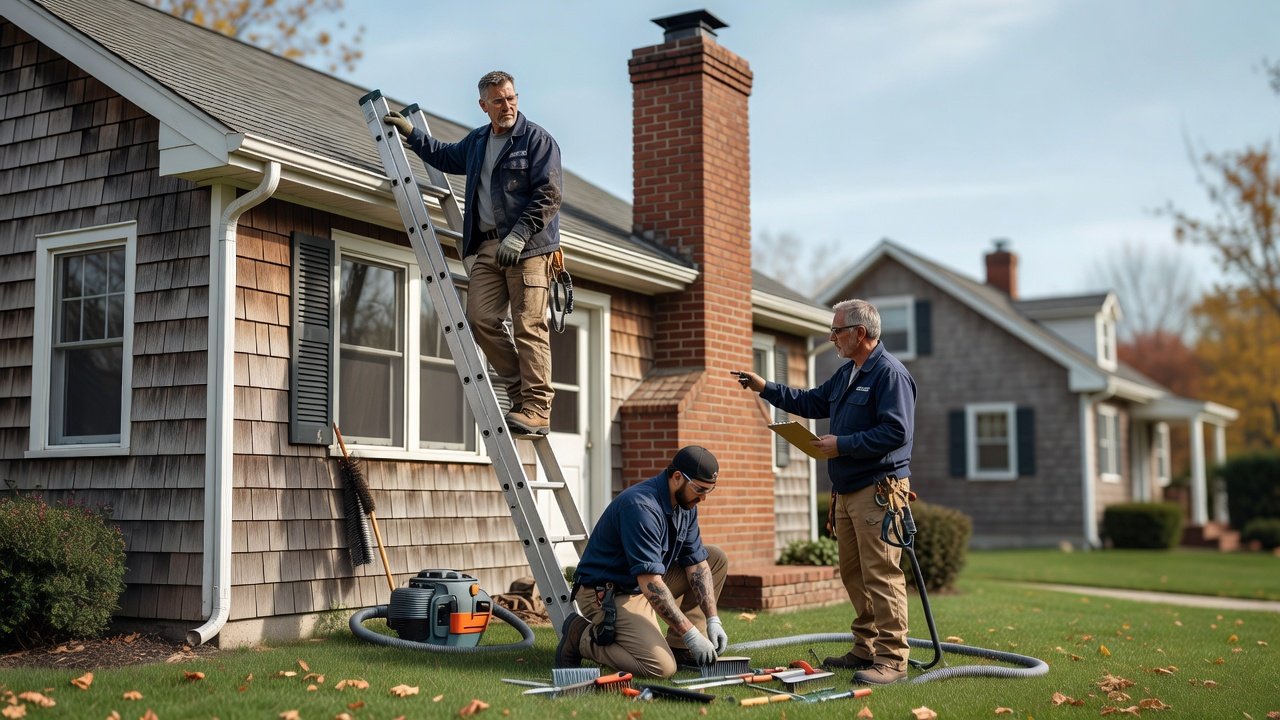
Trusted Local Services New Jersey: 2026 Guide for Kenilworth Residents
A homeowner on Springfield Avenue in Kenilworth called us last February after her oil furnace started backdrafting smoke into the kitchen every time the wind picked up from the west. She had already called two other local services in New Jersey before reaching us, and neither one had looked past the smoke shelf. We drove out the next morning, and within twenty minutes we had a clear picture of what was actually wrong. The flue liner had a lateral crack just above the smoke chamber, and a bird nest from the previous spring was blocking nearly a third of the flue opening. Two separate problems, one confusing symptom.
That kind of call is not unusual in Kenilworth. The borough sits in a pocket of Union County where older Cape Cods and colonials from the 1940s and 1950s still have their original masonry chimneys. Those structures are well built, but they are also seventy-plus years old. Things go wrong in ways that are not always obvious from the outside, and diagnosing them correctly matters more than fixing them fast.
Below is a straight account of the most common chimney problems we find in Kenilworth and surrounding towns, what causes them, how we actually figure out what is wrong, and what a proper fix looks like.
Why Kenilworth Chimneys Break Down Differently Than You Might Expect
Most homeowners assume chimney problems look dramatic: a collapsed crown, visible cracks running up the exterior, or heavy black staining around the firebox. In reality, the issues that cause the most damage are often invisible from the living room. Union County weather plays a role. Kenilworth gets hard freezes in January and February, followed by wet thaws in March, and that freeze-thaw cycle is one of the primary drivers of masonry deterioration. Water gets into hairline cracks in the mortar, freezes, expands, and pushes the joints apart a little more each year. We see this on almost every chimney that has gone five or more years without a pointed inspection.
Here is what we find most often, and what the diagnostic process actually looks like on each one.
Six Problems We Diagnose and Fix on Kenilworth Chimneys
1. Cracked or Deteriorated Flue Liner
Symptoms are usually subtle: a faint smoky smell in rooms nowhere near the fireplace, staining on interior walls, or a furnace that seems to run fine but trips the CO detector occasionally. The liner crack itself is almost never visible from below. We use a closed-circuit camera to run the flue from cap to firebox. A lateral crack in a clay tile liner shows up clearly on video, and we can measure its position precisely. The fix depends on severity. A single hairline crack in an otherwise sound liner can sometimes be addressed with a heat-resistant liner sealant. A liner with multiple fractures or offset joints needs either a full reline with a stainless steel flexible liner or a poured-in-place system. According to the Consumer Product Safety Commission (CPSC), carbon monoxide from blocked or damaged chimneys sends thousands of Americans to emergency rooms each year, which is why we do not patch and hope on liner problems. Can it be prevented? Annual camera inspections catch liner cracks before they become separation. We recommend them every year for any chimney connected to a gas appliance.
2. Blocked or Collapsed Flue from Animal Entry
Kenilworth has a lot of mature trees, which means a lot of squirrels and starlings looking for nesting spots in late March and early April. An uncapped flue is an open invitation. The blockage symptoms look almost identical to a liner crack at first: backdrafting, smoke rollout, or a furnace that short-cycles. We distinguish the two by probing the flue before the camera goes in. A nest compresses differently than a liner fragment. Animal entry also introduces moisture and organic debris that accelerates liner deterioration. The fix is clearing the obstruction, cleaning the flue, and installing a properly fitted stainless steel chimney cap. The National Chimney Sweep Guild (NCSG) notes that a professionally installed chimney cap can reduce moisture intrusion, animal entry, and downdraft issues and extend chimney life by years. Prevention is simple: cap the flue. We install them on every chimney we service in Kenilworth, Cranford, Clark, and the rest of Union County.
3. Creosote Buildup Beyond Level One
A homeowner burning seasoned hardwood in a well-drafted fireplace will accumulate what the CSIA calls first-degree creosote: a light, dusty deposit that brushes out easily. But a lot of the Kenilworth homes we visit are burning wood that is not fully seasoned, or running fires at low smolder temperatures because they are trying to stretch the heat overnight. That produces second-degree creosote, a flaky, tar-like layer, and sometimes third-degree buildup, which is essentially a hardened glaze on the liner walls that is highly flammable and extremely difficult to remove. The Chimney Safety Institute of America (CSIA) classifies creosote in three degrees, with third-degree buildup requiring immediate professional removal. We assess degree of buildup visually and with a creosote test log before recommending a cleaning method. Second-degree deposits need rotary brush cleaning or chemical treatment. Third-degree situations sometimes require thermal cleaning or liner replacement. Prevention: burn dry wood, keep the damper fully open during fires, and get an annual sweep.
4. Mortar Joint Failure and Spalling Brick
This is the most common structural problem we see on Kenilworth chimneys, and it is almost always a function of age plus deferred maintenance. The exterior mortar joints open up, water infiltrates, the freeze-thaw cycle widens the gaps, and eventually brick faces begin to pop off (that is spalling). By the time a homeowner notices loose brick on the roof or in the yard, the damage has usually been progressing for three to four years. We diagnose by visual inspection of the exterior joints from the roofline and by checking the attic framing around the chimney chase for moisture staining. Tuckpointing, which is cutting out the failed mortar and packing in fresh material, stops the cycle. We also apply a vapor-permeable waterproofing sealer to slow future water absorption. This is not optional maintenance in New Jersey’s climate. It is what keeps a $500 tuckpointing job from becoming a $6,000 chimney rebuild.
5. Damaged or Missing Chimney Crown
The crown is the concrete or mortar cap that seals the top of the chimney stack, leaving only the flue opening exposed. When it cracks, which it does on most older chimneys because standard mortar shrinks, rainwater channels directly into the chimney structure. The symptom is often interior water damage: staining on the ceiling near the chimney, efflorescence (white salt deposits) on the brick face, or a damp smell from the firebox after rain. We see this constantly in Elizabeth and Linden as well as in Kenilworth. Diagnosis is visual from the roof. The fix is either a crown repair using elastomeric sealant for small cracks or a full crown rebuild if the existing crown has separated or shifted. A proper crown is sloped and overhung, not flat and flush, so water sheds away from the brick. Prevention: inspect the crown every two years and seal it before cracks widen.
6. Damper Problems: Stuck, Warped, or Completely Missing
A damper that does not seal fully costs the homeowner real money in heat loss every winter. A damper that is stuck shut is a carbon monoxide hazard the moment someone lights a fire. We diagnose damper condition by hand during every inspection, checking for free movement, checking the seal against light from above, and looking for warping from past hot fires or rust from moisture. In many of the older homes in Roselle Park and Union that we service, the original throat dampers are cast iron units that have simply corroded past the point of function. The fix is either a throat damper replacement or installation of a top-sealing damper, which also acts as a cap. Top-sealing dampers are particularly effective in older masonry systems where the original throat dimensions have shifted. Prevention: close the damper after every fire has fully cooled and check it for ease of operation each fall.
What an Honest Inspection Actually Looks Like
When our crew arrives at a Kenilworth home, the first thing we do is ask about recent symptoms and appliance history before we touch anything. That conversation shapes where we look first. Then we do a visual exterior check from the ground and the roof, a visual interior check of the firebox and smoke chamber, and a camera inspection of the flue if anything in the first two steps raises a flag. We do not upsell camera inspections on every visit, but we do explain clearly when one is warranted and why. A written report with photos follows every inspection. According to the National Fire Protection Association (NFPA 211), chimneys, fireplaces, and vents should be inspected at least once per year and cleaned when necessary to reduce fire risk. We think of that standard as a floor, not a ceiling.
If you are in Kenilworth, Westfield, Rahway, Clark, or anywhere else in Union County and your chimney has not had a professional look in the last twelve months, now is the right time to schedule one. Call Roselle Chimney and we will give you a straightforward assessment with no pressure and no guesswork. We have been working in these neighborhoods long enough to know what to look for, and we will tell you exactly what we find.
Frequently Asked Questions
How do I know if my Kenilworth chimney needs repair or just a cleaning?
Cleaning and repair are not the same thing, and confusing the two is one of the most common mistakes homeowners make. A cleaning removes soot and creosote deposits. Repair addresses structural or functional failures, like cracked liners, failed mortar joints, or damaged crowns. Many chimneys need both. The only way to know for certain is a proper Level 1 or Level 2 inspection by a certified chimney professional. We perform those inspections throughout Kenilworth and Union County and provide written findings so you are not guessing.
Is it safe to use my fireplace if I smell smoke inside the house?
No, and we say that clearly. A smoky smell indoors during or after a fire almost always means combustion gases are not exiting the home the way they should. That can be caused by a blocked flue, a cracked liner, a closed or stuck damper, or a draft problem created by pressure imbalances in the house. All of those scenarios carry carbon monoxide risk. Do not use the appliance again until a qualified chimney technician has identified and corrected the cause. This is not a situation to troubleshoot with trial and error.
What does chimney repair typically cost in Kenilworth, NJ in 2026?
Costs vary widely depending on what is wrong. A standard chimney sweep and Level 1 inspection in Kenilworth generally runs between $150 and $250. Tuckpointing a deteriorated chimney stack typically ranges from $400 to $900 depending on how much mortar joint area needs to be addressed. A full stainless steel liner installation for a gas appliance or wood-burning fireplace can run between $2,500 and $4,500. Crown repairs, cap installations, and damper replacements fall somewhere in between. We provide written estimates before any work begins so there are no surprises on the invoice.
Related from Roselle Chimney: Chimney Flue Cleaning Cranford · Trusted Chimney Sweep Roselle New Jersey · Trusted Best Chimney Company Roselle NJ