
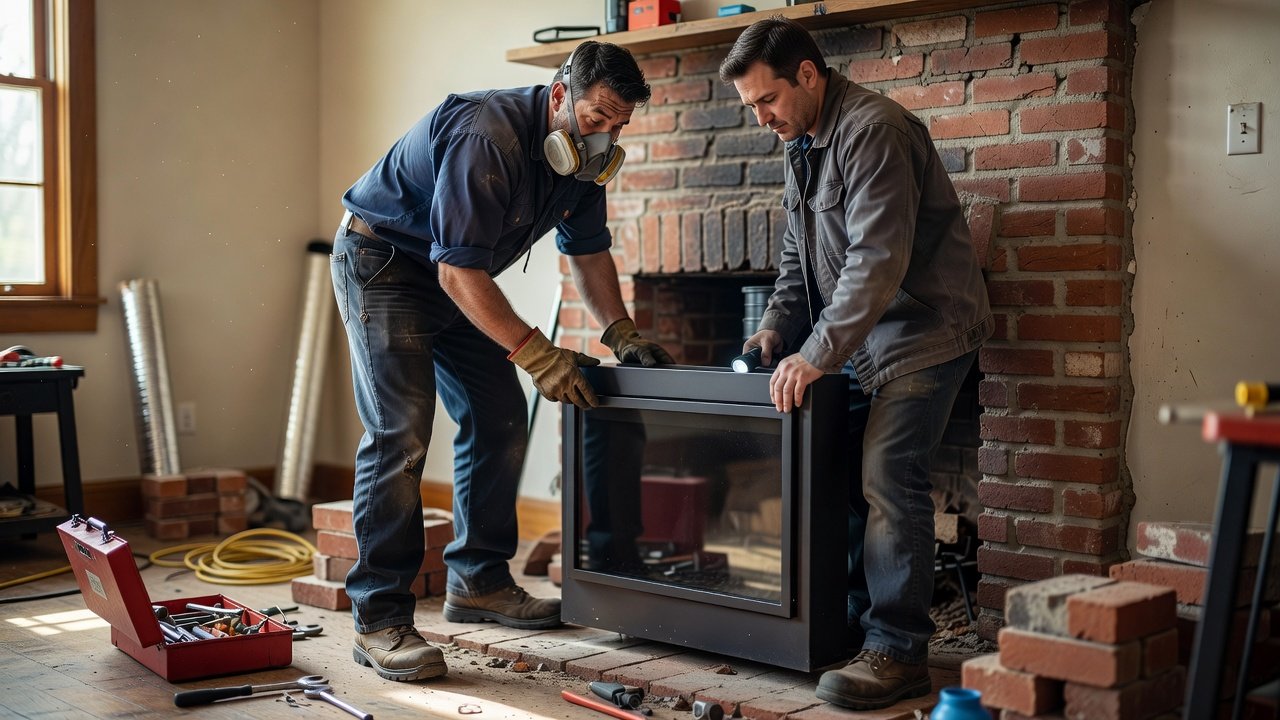
Trusted Fireplace Insert Installation Roselle NJ: 2026 Guide for Roselle Park Residents
A homeowner on Locust Street in Roselle Park called us last February, a few weeks after a local contractor had installed a gas fireplace insert in her living room. The unit looked great. The flame came on. She was thrilled until she started getting headaches every time she ran it for more than an hour. When our crew came out to take a look, we found the liner had never been properly connected to the existing flue, and combustion gases were leaking into the living space. The insert itself was fine. The installation was the problem.
We do fireplace insert installation in Roselle NJ and across Union County every season, and we’ve had this conversation more times than we can count. There is a lot of misinformation floating around about what this job actually involves, who should do it, and what can go wrong when corners get cut. This article is our attempt to clear that up plainly, and from real field experience.
Thinking Any Contractor Can Handle the Job
This is probably the most common assumption we run into, especially in older neighborhoods like Roselle Park and Elizabeth where homeowners are used to calling a general handyman for most home projects. A fireplace insert is an appliance, and installing one is not a carpentry job. It involves combustion, venting, and in many cases gas or electrical connections. In New Jersey, fireplace insert installation requires proper licensing and must comply with NFPA 211 standards and local building codes.
According to the National Fire Protection Association (NFPA 211), chimneys, fireplaces, and vents should be inspected at least once per year and cleaned when necessary to reduce fire risk. That standard also governs how inserts must be vented and it is specific. A general contractor who does not specialize in hearth systems is unlikely to know those specifications or to pull the correct permits. The result can be a unit that looks installed but is actually a slow-building hazard.
Assuming the Old Chimney Liner Is Fine to Reuse
We hear this one constantly, and it makes sense on the surface the chimney is already there, so why not use it? The problem is that most chimneys in Roselle Park, Cranford, and Union were built for wood-burning fireplaces, which produce combustion gases at very different temperatures and volumes than gas or pellet inserts. When you drop a gas insert into that system and tie it to an oversized, unlined, or deteriorating flue, you create a venting mismatch that can cause backdrafting.
Backdrafting means combustion byproducts including carbon monoxide move into the living area instead of up and out. According to the Consumer Product Safety Commission (CPSC), carbon monoxide poisoning from blocked or damaged chimneys sends thousands of Americans to emergency rooms each year. A new stainless-steel liner, properly sized to the insert’s BTU output, is not optional. It is the part of the job that actually makes the system safe.
We replaced a liner on Chestnut Street in Roselle Park last spring after a homeowner’s neighbor recommended they skip it to save money. The existing terracotta liner had two visible cracks when we ran a camera into it. Those cracks would have allowed CO to migrate into the wall cavity. The liner cost a fraction of what a CO incident would have cost that family.
Fireplace Insert Installation Roselle NJ: Why Sizing Gets Overlooked
Most people choose an insert based on looks or price. That’s understandable the showroom photos are appealing, and budget matters. But insert sizing is a technical calculation based on the square footage of the space you’re heating, the insulation quality of the home, and the volume of the existing firebox. Drop an oversized insert into a small Roselle Park colonial and you’ll overheat the room, stress the venting system, and likely void the manufacturer warranty. Go too small and the unit runs constantly without ever reaching comfortable output.
We’ve seen both scenarios in Linden and Rahway, where a lot of homes have similar layouts and homeowners sometimes buy what a neighbor bought without checking whether the specs actually match. Our team measures the firebox opening, checks the firebox depth, and reviews the flue dimensions before we ever recommend a unit. It takes maybe thirty minutes and it prevents problems that could last years.
Believing the Insert Doesn’t Need an Inspection Before Installation
Some homeowners call us ready to install and don’t want to hear anything about a chimney inspection first. We understand they’ve already picked the unit, they’re excited, and an inspection feels like an upsell. It isn’t. A Level 2 chimney inspection before insert installation is the professional standard, and it exists for good reason.
The Chimney Safety Institute of America (CSIA) reports that failure to clean and inspect chimneys is one of the leading causes of home heating fires in the United States. An inspection before installation identifies structural damage, existing obstructions, and liner condition things that directly affect how the new insert will perform and whether it will vent safely. We’ve found bird nests, collapsed tiles, and even a broken clay flue section during pre-installation inspections in Westfield and Kenilworth. None of those homeowners knew any of it was there.
Treating the Surround and Hearth Extension as Optional Finishing Details
This one is a safety issue that gets framed as an aesthetic choice. The surround framing and hearth extension are not decorative add-ons they are required clearances. Both NFPA 211 and most insert manufacturers specify minimum distances between the insert face and any combustible materials, including mantels, trim, and flooring. If those clearances are not met, you have a fire risk sitting in your living room that looks completely normal.
We’ve walked into living rooms in Clark and Union where inserts had been installed flush against wood trim with no proper clearance maintained. The homeowners had no idea. A well-installed insert should have documentation showing that all clearances meet code, and your installer should be able to explain each one to you if you ask.
Let Our Team Handle It the Right Way
We serve Roselle Park, Roselle, Elizabeth, Linden, Cranford, Westfield, Clark, Rahway, Kenilworth, and the surrounding Union County area. When you call Roselle Chimney for fireplace insert installation, we start with an honest assessment of your existing system, recommend insert options that actually fit your home, pull the right permits, and install with a liner sized for the unit. We don’t cut corners because we’re the ones who end up called back when something goes wrong — and we’d rather not have anything go wrong in the first place.
If you’re planning a fireplace insert installation in Roselle NJ or the surrounding towns, give us a call before you buy anything. A quick conversation can save you from the mistakes we see most often.
Frequently Asked Questions
Do I need a permit for fireplace insert installation in Roselle Park, NJ?
Yes. In Roselle Park and throughout Union County, fireplace insert installation requires a permit from your local building department. The installation must comply with NFPA 211 and applicable New Jersey fuel gas codes. Any licensed installer working in this area should pull the permit on your behalf — if they offer to skip it, that is a serious red flag.
How long does fireplace insert installation take?
Most installations take between four and eight hours depending on whether a new liner is being run, the condition of the existing firebox, and the type of insert gas, electric, or pellet. If a pre-installation inspection reveals additional repairs needed in the flue or firebox, that can add time. We typically schedule installations in a single visit and give homeowners a realistic time window before we start.
Can I install a gas fireplace insert in a wood-burning fireplace?
Yes, and it’s one of the most popular upgrades we do for Union County homeowners. However, the existing wood-burning flue almost always needs to be relined with a properly sized stainless steel liner to handle the different venting requirements of a gas appliance. Running a gas insert through an old oversized wood-burning flue without relining it is a venting and safety problem that can lead to carbon monoxide exposure in the home.
Related from Roselle Chimney: Trusted Chimney Sweep Roselle New Jersey · Chimney Smoke Problem Fix in Roselle, NJ — Stop the Smoke, Protect You · Smart Chimney Cap Installation Roselle NJ
Pingback: Trusted Parked Domain name on Hostinger DNS system Roselle: 2026 Guide for Rahway Residents – Roselle Chimney