
Reliable Wood Burning Fireplace Cleaning Union NJ: 2026 Guide for Union County Residents
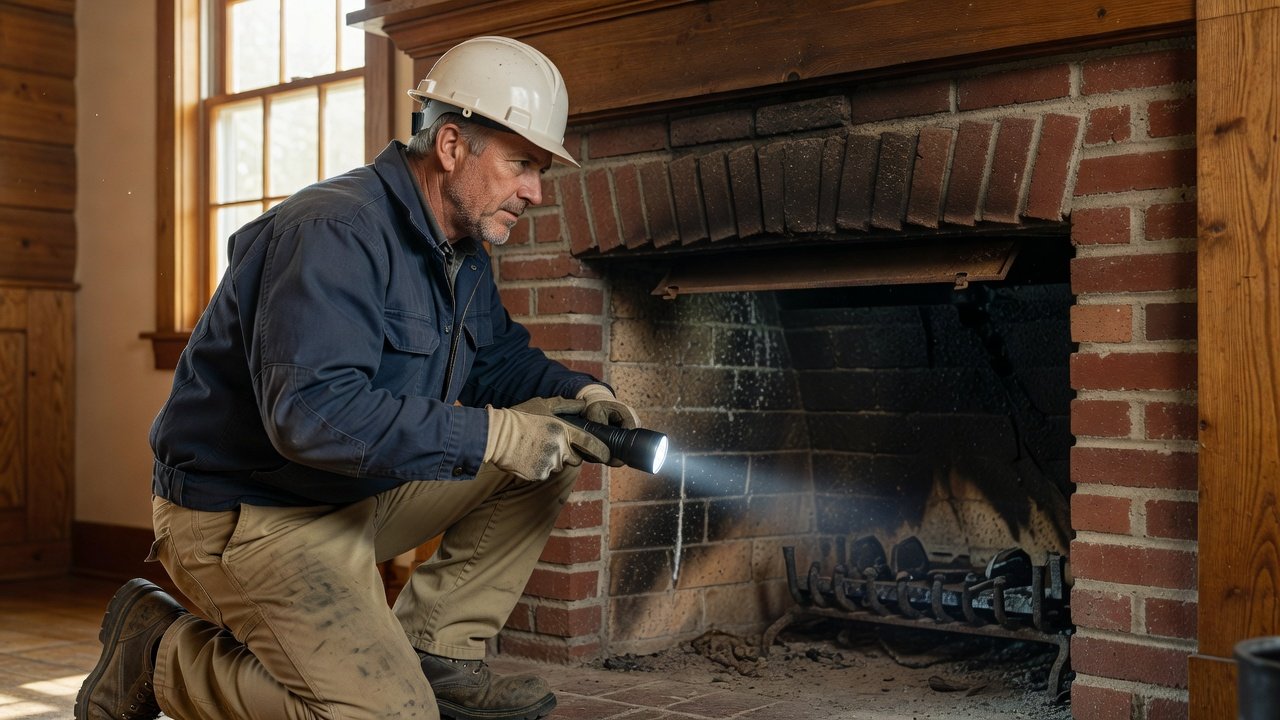
A homeowner on Chestnut Street in Roselle called us last November after her wood-burning fireplace started smoking back into the living room every time she lit a fire. She had already cleaned the glass doors herself, vacuumed out the firebox, and bought a new set of grates. The smoking kept getting worse. When our technician got there and put a flashlight up the flue, he found a third-degree creosote deposit coating the liner so heavily that the effective opening had narrowed by nearly half. No amount of vacuuming at the hearth level was going to fix that.
We tell that story because it captures the most important thing to understand about wood burning fireplace cleaning Union NJ homeowners deal with every season: most of what causes real problems sits out of sight, and the line between a DIY job and a professional one is not always obvious until something goes wrong. Below we walk through the most common problems we diagnose in Union County homes, what is actually causing them, and how they get fixed properly.
What Homeowners Can Reasonably Do Themselves
We are not in the business of making people feel helpless about their own fireplaces. There are tasks that belong on a homeowner’s regular to-do list.
Cleaning out cold ash after a fire is safe and straightforward, provided you wait at least 24 hours and use a metal ash container with a tight lid. Wiping down fireplace glass with a non-abrasive cleaner made for that purpose is fine. Checking that the damper handle moves freely is something anyone can do by feel. And if you notice an obvious obstruction near the top of the firebox, like a piece of debris that fell in, removing it carefully is reasonable.
Where DIY hits its limit is the flue itself. The average single-story chimney flue in a Roselle or Union Township home runs eight to twelve feet of liner before it exits the roofline. You cannot see it, you cannot reach it, and the tools required to clean it safely without spreading fine creosote dust through your living space cost several hundred dollars. More importantly, cleaning without a prior inspection means you may be brushing a flue that already has a crack or a deteriorating tile joint which can make a hidden problem worse.
Six Problems We See Repeatedly in Union County Wood-Burning Fireplaces
1. Smoke rolling back into the room
Symptoms are obvious: eyes burn, the room fills with haze within minutes of lighting a fire. Homeowners often blame the wood, and sometimes wet wood is a contributing factor. But when we investigate, the most common causes are a blocked flue, a collapsed or improperly sized damper, or negative pressure in the home pulling air down the chimney faster than the fire can drive it up.
The fix depends entirely on the cause. A blocked flue needs professional cleaning or obstruction removal. A damper problem usually means repair or replacement of the damper plate or throat assembly. A pressure problem sometimes points to a need for a top-mount damper or a slightly taller chimney cap. We have solved this problem in homes across Roselle, Union, and Linden, and the root cause is almost never what the homeowner first suspected.
2. Creosote buildup at dangerous levels
Creosote is unavoidable when you burn wood. It forms when combustion gases cool as they rise through the flue and condense on the liner walls. The CSIA classifies it in three degrees, with third-degree buildup requiring immediate professional removal because it is dense, tar-like, and highly flammable. We have pulled out creosote deposits in Roselle Park and Cranford homes that were literally glazed onto the liner like enamel a rotary loop system and chemical treatment were the only safe options.
A homeowner cannot assess creosote level without a flashlight, a mirror, and enough experience to know what each degree looks like. Brushing third-degree deposits with a standard chimney brush can cause chunks to fall into the firebox and create an immediate fire hazard. This is a job that requires both the right tools and the judgment to know which tools to use.
3. A cracked or deteriorating flue liner
This one rarely announces itself loudly. You might notice a faint smoky odor in a room adjacent to the chimney, or in an upstairs bedroom, even when the fireplace is not in use. In some cases there are no symptoms at all until a chimney camera shows us a tile joint that has separated or a section of clay liner that has cracked under thermal stress.
According to the National Fire Protection Association (NFPA 211), chimneys, fireplaces, and vents should be inspected at least once per year and cleaned when necessary to reduce fire risk. That annual inspection is precisely what catches liner damage before it becomes a fire or a carbon monoxide issue. The fix for a compromised liner is either a stainless steel relining or, depending on the damage, targeted tile repair neither of which a homeowner can safely DIY.
4. Animal entry and nest blockages
Chimney swifts, starlings, and squirrels all use uncapped chimneys as nesting sites, and we find them in homes throughout Elizabeth and Kenilworth as well as in Roselle. A partial nest can restrict the flue enough to cause smoke backup. A complete blockage can be serious. We have also found raccoons that had fallen into the flue and become trapped.
The National Chimney Sweep Guild notes that a professionally installed chimney cap can reduce moisture intrusion, animal entry, and downdraft issues, extending chimney life by years and reducing long-term repair costs. If you are finding debris in your firebox that looks like twigs or dry grass, or hearing sounds from the flue, do not light a fire. Call us first.
5. Deteriorating mortar and spalling bricks
Water is the primary enemy of masonry chimneys in New Jersey. Our freeze-thaw cycles from November through March are brutal on mortar joints that have already started to open. A homeowner in Westfield called us last spring after noticing chunks of brick on her roof. When we inspected the chimney, three courses of brick near the crown were spalling, and the crown itself had cracked through completely, allowing water to funnel directly into the liner.
A homeowner can spot obvious exterior brick damage from the ground with binoculars. But assessing whether the damage is cosmetic or structural requires someone on the roof with a probe. Tuckpointing deteriorated joints and replacing a cracked crown are repairs that, done correctly, seal the system for years. Done with the wrong mortar mix or by someone who does not understand chimney-specific masonry, they can trap moisture and accelerate further damage.
6. A stuck or corroded damper
The damper sits just above the firebox, and in many older Roselle homes it is the original cast-iron plate that came with the fireplace thirty or forty years ago. Corrosion, warping from repeated heat cycles, and ash buildup all cause dampers to stick open or closed. A damper stuck open wastes heat all winter. One stuck closed will fill your home with smoke the moment you light a fire.
The U.S. Fire Administration notes that heating fires peak in December and January, making pre-winter chimney service critical for homeowners in cold-weather states like New Jersey. A damper inspection and test costs nothing when it is part of an annual cleaning. Replacing a throat damper or upgrading to a top-mount model is a half-day repair that most homeowners should not attempt without mechanical experience working at height and in a confined firebox space.
The Honest Case for Annual Professional Service
We understand that a chimney cleaning is not the most exciting thing to spend money on. But consider what is at stake. According to the Consumer Product Safety Commission, carbon monoxide poisoning from blocked or damaged chimneys sends thousands of Americans to emergency rooms each year. And the CSIA reports that failure to clean chimneys is one of the leading causes of home heating fires in the United States, accounting for thousands of incidents annually.
A professional cleaning and Level 1 inspection runs in the range of $200 to $300 for most Union County homes. That covers the visual inspection of accessible components, cleaning of the flue, and a basic assessment of the firebox and damper. It is not a luxury service. It is what stands between a working fireplace and a fire that starts inside your walls.
We serve Roselle, Roselle Park, Union, Elizabeth, Linden, Cranford, Westfield, Clark, Rahway, and Kenilworth. If your fireplace has shown any of the symptoms above, or if you simply cannot remember the last time a professional looked at it, give us a call before the heating season gets any further along. We would rather answer questions on the phone than respond to an emergency.
Frequently Asked Questions
How often should a wood-burning fireplace in Union NJ be professionally cleaned?
The NFPA recommends at least one inspection and cleaning per year for any chimney that is in use. If you burn wood frequently through the winter, we typically recommend an inspection both before the heating season and after it ends. Heavy use can push creosote levels into the second or third degree faster than most homeowners expect, especially in older homes with uninsulated or oversized flue liners common in parts of Union and Roselle.
Can I use one of those chimney cleaning logs instead of hiring a sweep?
Cleaning logs can reduce light first-degree creosote deposits slightly, but they are not a substitute for mechanical brushing and they do nothing for second or third-degree buildup. They also do not inspect the liner, damper, or crown, so any underlying damage goes undetected. We have cleaned flues from homeowners in Cranford and Rahway who had been using those logs faithfully for years and still had dangerous creosote accumulation higher up in the flue where the temperature drop is most significant.
What does wood burning fireplace cleaning in Union NJ typically cost in 2026?
For most single-flue wood-burning fireplaces in Union County, a standard cleaning and Level 1 inspection runs between $200 and $300. Pricing can increase if the flue has heavy creosote deposits that require chemical treatment, if the chimney is particularly tall, or if a camera inspection is needed to assess liner condition. We provide a clear estimate before any work begins, and we do not charge a separate fee just to come out and assess what you are dealing with.
Related from Roselle Chimney: Chimney Cleaning County Services from Roselle Chimney — Your Union Cou · Affordable Chimney Cleaning Union County NJ · Chimney Flue Cleaning Cranford