
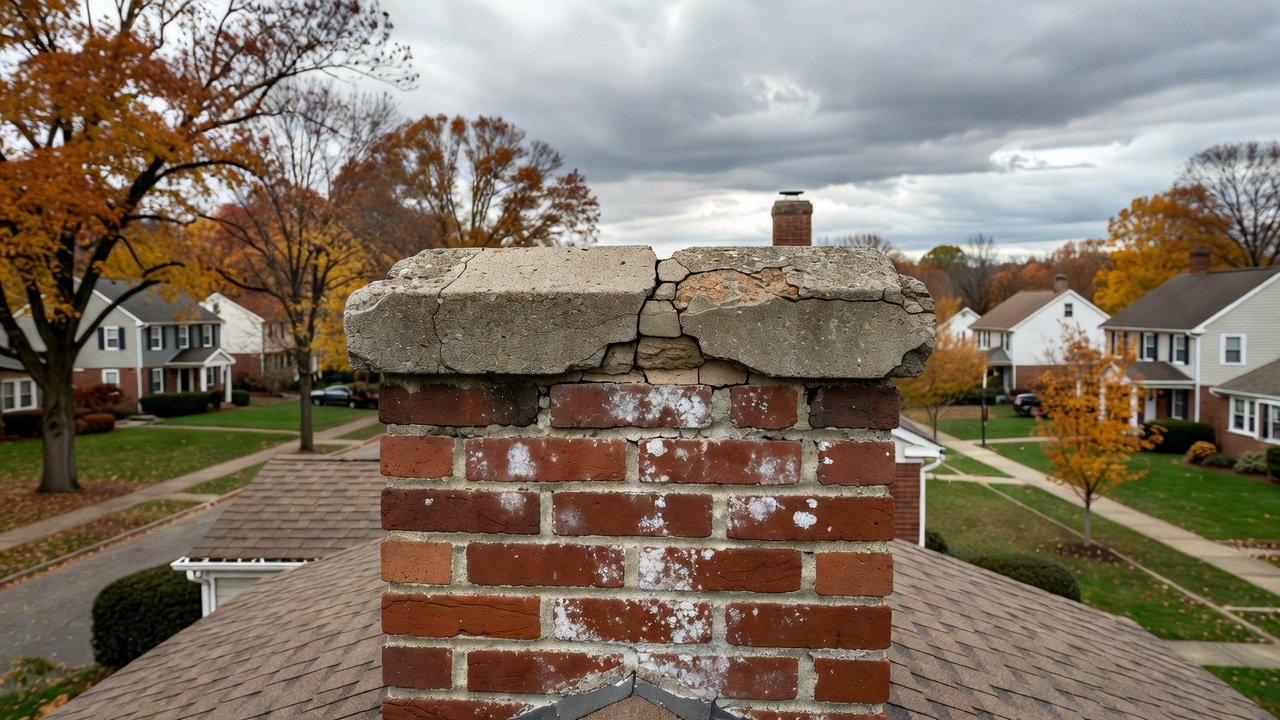
Smart Chimney Crown Repair Westfield NJ: 2026 Guide for Union County Residents
Most homeowners wait too long. They notice something looks a little off on the chimney, tell themselves it’s probably fine, and move on. By the time they call us, what could have been a $300 crown repair has turned into a $2,000 masonry job. We’ve seen this pattern dozens of times across Union County, and it’s almost always avoidable.
Chimney crown repair in Westfield NJ and surrounding communities like Roselle, Cranford, and Clark is one of the most requested services we handle every fall. The crown that sloped concrete cap that seals the top of your chimney stack takes a beating from freeze-thaw cycles, rain, and UV exposure every single year. When it fails, water gets in. And once water gets in, the damage spreads fast.
Last November, a homeowner on Clover Street in Westfield called us after noticing a damp patch on her living room ceiling that appeared every time it rained. She assumed it was a roof leak. Her roofer found nothing wrong. When we got up on the chimney, the crown had split clean across the middle a crack wide enough to slide two fingers into. Water had been channeling straight down into the flue for probably two full seasons. The repair itself took half a day. The interior plaster and smoke chamber damage cost her considerably more.
She’s not unusual. The mistake she made ignoring early warning signs because they seemed minor is the most common one we see. So, here’s a straightforward checklist of what to actually look for, what each sign means, and whether you need to call us now or can afford to keep watching it.
Warning Signs Your Chimney Crown Needs Attention
1. Visible Cracks Across the Crown Surface
Stand back and look at the top of your chimney stack from ground level. If you can see horizontal or diagonal lines running across the flat or sloped concrete cap, that’s a cracked crown. Even a hairline crack will admit water. In New Jersey winters, that water freezes, expands, and widens the crack every season. This is not a “keep an eye on it” situation. Call a pro now small cracks are inexpensive to seal. Wide cracks often mean the crown needs full replacement.
2. White Staining Running Down the Chimney Exterior
That chalky white residue on brick is called efflorescence. It forms when water moves through masonry and carries mineral salts to the surface. If you see it below your crown line, water is passing through the crown and into the brick. We run into this regularly on older homes in Roselle Park and Elizabeth. It’s a reliable early indicator of crown failure, and it’s something any homeowner can spot from the driveway.
3. Chunks of Concrete or Mortar on Your Roof or in the Fireplace
If you find small pieces of concrete or mortar on your roof shingles, in your gutters, or more alarming inside the firebox itself, pieces of your crown are breaking off. This means the damage has already progressed past surface cracking. You need a professional inspection immediately. We’ve pulled out chunks as large as a brick from fireboxes in homes across Cranford and Linden. That debris doesn’t land there by accident.
4. Water in the Firebox After Rain
Open the damper and look into your firebox after a heavy rain. Standing water or a wet firebox floor with no logical explanation points directly at a crown or flashing failure. According to the Consumer Product Safety Commission (CPSC), carbon monoxide poisoning from blocked or damaged chimneys sends thousands of Americans to emergency rooms each year and water intrusion that goes unaddressed accelerates exactly the kind of structural damage that leads to blockages. Don’t let this one wait.
5. Spalling or Flaking Brick Just Below the Crown
Spalling is when the face of a brick pops off, leaving a rough, pitted surface. It happens when moisture trapped inside brick freezes and forces the outer layer apart. If you see spalling on the top courses of your chimney the bricks closest to the crown the crown above them has almost certainly been leaking for a while. This is a call-now sign. Spalling brick left untreated can destabilize the entire chimney stack.
6. A Musty or Damp Smell from the Fireplace
This one doesn’t require binoculars or a ladder. If your fireplace smells musty, earthy, or like wet concrete when you open the damper especially after rain or the first cold snap of the season moisture has been sitting inside the flue or firebox. The Chimney Safety Institute of America (CSIA) reports that failure to clean and maintain chimneys is one of the leading causes of home heating fires in the United States, partly because moisture damage degrades the flue liner and creates conditions that allow hazardous buildup. A smell is an early warning. Don’t ignore it.
7. Interior Water Stains Near the Fireplace or on the Ceiling Above It
Stains on the ceiling or wall near your fireplace yellowish, brownish, or gray rings are a late-stage sign that water has already been traveling into your home for some time. At this point the crown damage has likely progressed. You’re not just looking at a crown repair anymore; you may be looking at liner damage, deteriorated mortar joints, and interior finish repair. We see this stage far too often on service calls in Union and Kenilworth, mostly because the earlier signs were overlooked.
8. A Crown That Looks Flat Instead of Sloped
This is a construction mistake that homeowners in older homes may not realize is a problem. A properly built chimney crown slopes away from the flue opening so water sheds off the sides. A flat crown or one with a lip that traps water — will fail much faster than a correctly formed one. If you’re not sure what yours looks like, this is worth having us check during any routine inspection. According to the National Fire Protection Association (NFPA 211), chimneys, fireplaces, and vents should be inspected at least once per year and crown geometry is exactly the kind of thing a trained eye catches that a homeowner won’t.
The Mistake That Makes Every One of These Signs Worse
The single most common mistake we see homeowners make is applying a DIY crack sealer from a hardware store without understanding what they’re dealing with. We’ve had calls from homeowners in Westfield and Roselle who painted over a cracked crown with a concrete sealant, felt good about it, and called us two years later with a crown that was falling apart underneath that surface coat. Sealants and fillers have their place but only on properly diagnosed damage, applied correctly, often after partial or full crown replacement. Covering a structural problem with a surface product is not a fix. It’s just a delay with a worse outcome.
The second mistake: assuming a roofer can evaluate the crown. Roofers look at shingles and flashing. A qualified chimney technician looks at the crown geometry, the bond between crown and brick, the flue tile condition, and the surrounding mortar joints as a system. These are different scopes of work.
What Chimney Crown Repair in Westfield NJ Actually Involves
When we respond to a crown repair call whether in Westfield, Roselle, Rahway, or anywhere else in Union County we start with a full visual inspection from ground level and then from the roof. We assess whether the crown can be resurfaced with a professional-grade elastomeric crown coat, or whether it needs to be removed and rebuilt. Resurfacing works on crowns with surface cracks and sound underlying structure. Rebuilding is necessary when the crown has fractured into sections, when it’s pulling away from the flue tile, or when it was poorly formed to begin with. We’ll tell you exactly which one you need and why and we won’t upsell you on a rebuild if a repair is the honest answer.
If you’ve noticed any of the warning signs above on your home in Westfield, Roselle, Cranford, or anywhere in Union County, don’t let another winter go by. Reach out to our team at Roselle Chimney to schedule an inspection. We’ll get eyes on your crown, give you a straight assessment, and explain your options clearly. No pressure, no guesswork.
Frequently Asked Questions
How much does chimney crown repair cost in Westfield NJ?
In 2026, crown resurfacing with an elastomeric crown coat typically runs between $250 and $500 for most Union County homes, depending on chimney size and access. A full crown replacement where the old crown is removed and rebuilt generally falls in the $600 to $1,500 range. Costs rise when underlying brick or mortar damage is found during inspection. Getting a repair done early almost always saves money compared to waiting.
Can I seal a cracked chimney crown myself?
Consumer-grade sealants sold at hardware stores can cover hairline surface cracks as a very short-term measure, but they won’t hold on a structurally compromised crown and applying them incorrectly can trap moisture and accelerate damage. If the crack is wide enough to see clearly, or if you’ve noticed water in the firebox or interior staining, a professional needs to assess the crown before any product is applied. DIY repairs on a failing crown frequently make the eventual professional repair more expensive.
How do I know if I need crown repair or full chimney tuckpointing?
Crown damage and mortar joint deterioration often occur together but require different repairs. The crown is the concrete cap at the very top of the chimney; tuckpointing addresses the mortar between the individual bricks below it. If you see crumbling or missing mortar in the joints along the chimney stack not just at the top you likely need both services. A qualified chimney technician can tell you exactly what’s failing and what’s still in good shape during a single inspection visit.
Related from Roselle Chimney: Chimney Cleaning County Services from Roselle Chimney — Your Union Cou · Affordable Chimney Cleaning Union County NJ · Chimney Flue Cleaning Cranford