
Safe Creosote Removal Roselle NJ: 2026 Guide for Roselle Residents
A homeowner on Locust Street in Roselle called us last February after her wood-burning insert started throwing smoke back into the living room. She had been burning every weekend since November and assumed the chimney just needed a basic sweep. When our technician pulled the liner inspection camera, he found a thick, shiny tar-like coating coating the entire flue third-degree creosote, the kind that can ignite at temperatures a normal fire reaches easily. She had no idea it was there. That call is one we get several times every winter, and it never gets less serious.
Creosote removal in Roselle NJ is one of the most common services we provide, and it is also the service homeowners most frequently underestimate. This article is going to give you a straight answer on what you can handle yourself, what genuinely requires a professional, and what happens when the problem gets ignored long enough.
What Creosote Actually Is and Why It Builds So Fast Here
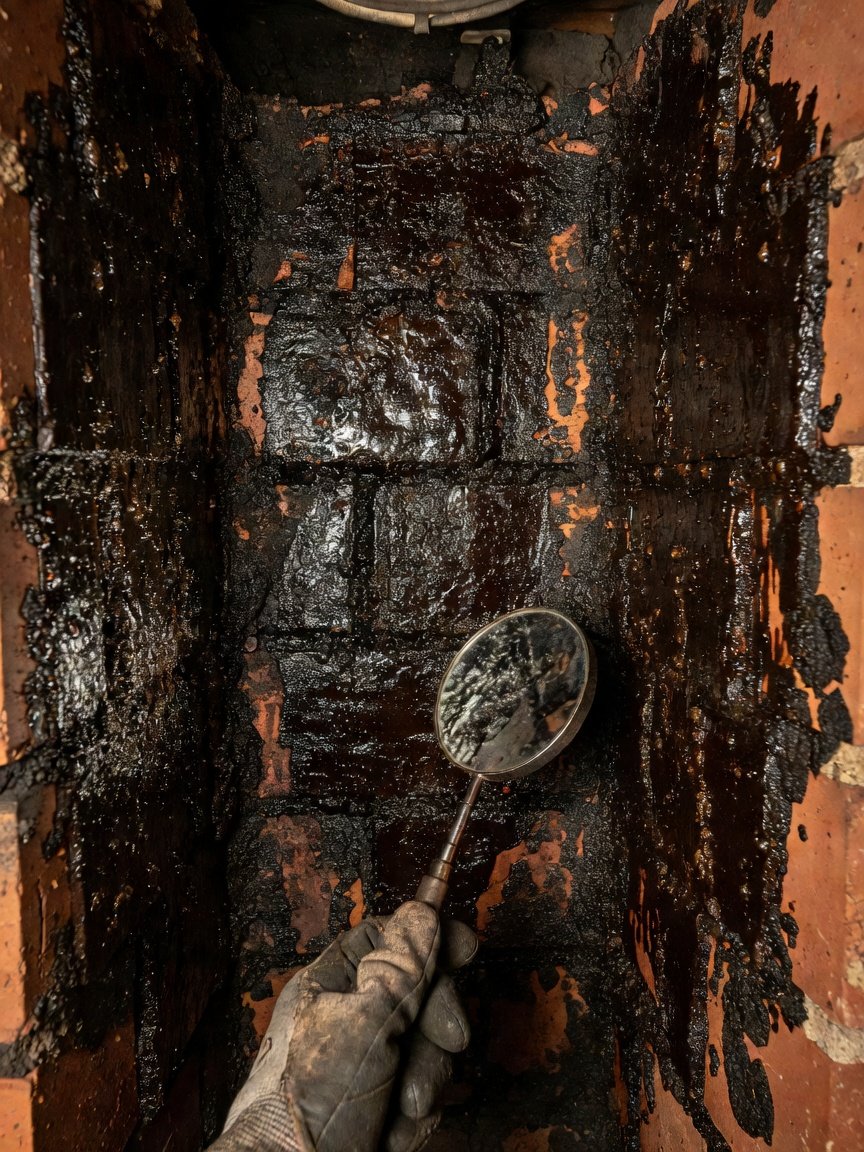
Every time wood burns, it releases smoke, gases, and unburned particles that rise up the flue. When that warm, moist air hits the cooler walls of your chimney, it condenses. Over time those deposits harden into creosote. The Chimney Safety Institute of America classifies creosote in three degrees: first-degree is a light, dusty soot that brushes off easily; second-degree is a flaky, harder tar; third-degree is a dense, glossy coating that has essentially baked onto the liner and requires chemical treatment or mechanical grinding to remove.
In Union County, we see heavier buildup than in some other parts of New Jersey, and there are real reasons for that. Older homes in Roselle, Elizabeth, and Linden often have masonry chimneys with modest flue diameters that were originally sized for coal or oil heat, not the large wood-burning inserts homeowners have retrofitted over the past two decades. Restricted flues mean slower draft, cooler flue temperatures, and faster creosote accumulation. Add in the fact that many homeowners burn green or partially seasoned wood through the winter, and buildup happens faster than the annual inspection cycle catches it.
According to the Chimney Safety Institute of America, failure to clean chimneys is one of the leading causes of home heating fires in the United States, accounting for thousands of incidents annually. The U.S. Fire Administration notes that heating fires peak in December and January exactly when chimneys in Roselle and across New Jersey are working hardest.
What a Capable Homeowner Can Safely Do
We are not going to tell you that every chimney task requires a professional. That is not honest, and homeowners see through it. There are things a careful, physically able person can handle themselves.
- Burning a certified creosote-reducing chimney log once per season. These products, available at hardware stores, use chemical agents to convert light first-degree deposits into a powdery ash that falls to the firebox floor. They work on mild buildup and can extend the time between professional sweeps. They do not replace a sweep they supplement one.
- Cleaning the firebox floor and smoke shelf with a stiff brush and ash vacuum after the fireplace has been cold for at least 24 hours. This is basic maintenance any homeowner can do.
- Visually inspecting the damper for obvious rust, warping, or debris from the firebox side. You are not doing a flue inspection, but you can spot a damper that won’t seal or a bird nest sitting on top of it.
- Applying a creosote-reducing spray product to the firebox walls and lower flue opening as a maintenance measure between professional cleanings, following manufacturer instructions carefully.
That is roughly the limit of safe DIY work on a chimney with creosote concerns. Notice that none of it involves going up on the roof or inside the flue.
When Creosote Removal in Roselle NJ Requires a Professional
Second-degree and third-degree creosote cannot be safely or effectively removed without professional equipment and training. Here is why that matters, not as a sales pitch but as a real explanation.
Third-degree creosote requires rotary power brushes, chemical poultice treatments, or in severe cases, a process called chemical spray treatment that is applied, left to penetrate overnight, and then mechanically removed. None of that equipment is available to consumers, and improper scraping can fracture a clay tile liner, leaving gaps where flames can reach the surrounding framing. We have opened up walls in homes in Cranford and Rahway where a cracked liner had been venting combustion gases directly into a wood stud bay for years. The homeowners had no idea.
A professional sweep also performs a Level I or Level II inspection as part of the service. According to the National Fire Protection Association’s standard NFPA 211, chimneys should be inspected at least once per year and cleaned when necessary. That inspection is what catches a cracked liner, a failed mortar joint, or a deteriorated flue tile before it becomes a structure fire. A homeowner with a brush kit on the roof cannot replicate that.
Other situations that require a professional call:
- Any visible glazed or shiny buildup inside the flue this is second or third degree and will not respond to consumer products.
- Smoke entering the living space during a normal fire, which can indicate a blocked or lined flue.
- A detectable odor of tar or asphalt in the house, even when the fireplace is not in use. This almost always means heavy creosote deposits are off-gassing into the home.
- Any chimney that has not been swept in more than 12 months and has seen regular use.
- A home you have recently purchased in Roselle Park, Union, Westfield, or anywhere else in Union County — always get an independent Level II inspection before your first fire.
The Concrete Risk of Waiting
Third-degree creosote ignites at temperatures a normal wood fire can reach. A chimney fire in a flue with heavy buildup can burn at over 2,000 degrees Fahrenheit. That is hot enough to crack clay tile liners, warp metal flue systems, and ignite adjacent framing within minutes. The Consumer Product Safety Commission notes that carbon monoxide poisoning from blocked or damaged chimneys sends thousands of Americans to emergency rooms each year and a compromised flue from a chimney fire is one of the more common paths to that outcome.
We have responded to calls in Clark and Kenilworth where a chimney fire had already occurred before the homeowner realized what the noise and smell were. In both cases, the repair cost was several thousand dollars more than a routine cleaning would have been. One of those homes required a full liner replacement. The other needed masonry repair to the crown and upper flue because the heat had cracked the mortar joints.
Ignoring creosote does not make it go away. It makes it worse with every fire you burn.
How We Handle It When You Call Us
When a homeowner in Roselle or the surrounding Union County area contacts us with a creosote concern, we start with a camera inspection of the flue before we recommend a cleaning approach. That tells us what degree of buildup we are dealing with so we can match the right method to the problem. First-degree buildup gets a standard sweep. Second-degree gets mechanical brushing with rotary equipment and a follow-up inspection. Third-degree gets a chemical treatment protocol that we apply and return to complete — we do not rush that process because shortcuts create callbacks and, more importantly, they leave the problem partially unresolved.
We serve Roselle, Roselle Park, Elizabeth, Linden, Union, Cranford, Westfield, Clark, Rahway, Kenilworth, and the broader Union County area. Most appointments are scheduled within the week, and we walk every homeowner through what we found before we leave the job.
If you have been burning wood this season and have not had your chimney inspected, reach out to our team at Roselle Chimney. A call now is a lot less expensive than a call after a chimney fire. Schedule your inspection and cleaning online or by phone we are a local crew, not a call center, and we pick up.
Frequently Asked Questions
How do I know if I have dangerous creosote buildup in my Roselle chimney?
The most reliable way is a professional camera inspection, but there are warning signs you can notice at home. A strong tar or asphalt smell in the house when the fireplace is not in use, smoke that rolls back into the room during a normal fire, or a visible shiny or glossy coating when you look up into the firebox with a flashlight all suggest second or third-degree buildup. If you see any of these, stop using the fireplace and schedule a professional inspection before your next fire.
Do creosote removal logs actually work, or are they a waste of money?
Creosote-reducing chimney logs can be a useful maintenance tool for chimneys with light, first-degree buildup. They use chemical compounds that help convert loose deposits into a more powdery form that falls away more easily. What they cannot do is address second or third-degree creosote, and they are not a substitute for an annual professional sweep and inspection. Think of them as a supplement between professional cleanings, not a replacement for one.
How much does professional creosote removal cost in Roselle, NJ?
In 2026, a standard chimney sweep with a Level I inspection in the Roselle and Union County area typically runs between $150 and $250 for a single fireplace or flue. Second-degree creosote removal requiring rotary brushing costs more, generally in the $250 to $400 range. Third-degree creosote requiring chemical treatment is priced on a case-by-case basis after a camera inspection, since the severity and flue length vary significantly. Any estimate you receive should be based on an actual inspection, not a flat rate quoted over the phone without seeing the chimney.
Related from Roselle Chimney: Chimney Smoke Problem Fix in Roselle, NJ — Stop the Smoke, Protect You · Chimney Cleaning County Services from Roselle Chimney — Your Union Cou