
Chimney Flue Cleaning in Elizabeth, NJ
Roselle Chimney offers chimney flue cleaning services in Elizabeth, NJ, and surrounding Union County communities. If your fireplace has been unused since last winter, or you’ve noticed smoke entering the room, unusual odors, or signs of a blockage, it may be time to arrange a professional inspection.
A chimney flue does more than carry smoke outside. It must provide a suitable passage for combustion gases to leave the home. Soot, creosote, animal nesting materials, and other debris can interfere with proper venting. Professional cleaning and inspection help identify these problems and determine whether additional maintenance is needed.
Elizabeth has an established housing stock, with a median construction year of approximately 1957. Older chimneys may have masonry flues, clay tile liners, or systems that have been modified over the years. However, the age of a home alone does not establish whether its chimney needs cleaning, repair, or liner replacement. Each system should be evaluated individually.
Why Chimney Flue Maintenance Matters in Elizabeth
Chimneys are exposed to rain, snow, temperature changes, and other environmental conditions throughout the year. Over time, moisture can enter through a damaged chimney crown, deteriorated mortar joints, defective flashing, or a missing cap.
Repeated moisture exposure can contribute to:
-
Cracked or deteriorating clay flue tiles.
-
Damaged mortar joints.
-
Rusted metal dampers and chimney components.
-
Efflorescence, which appears as white mineral deposits on masonry.
-
Deterioration of the chimney crown and exterior brickwork.
Wood-burning fireplaces can also accumulate creosote inside the flue. Creosote forms when combustion gases cool and condense along chimney surfaces. Its consistency can range from flaky deposits to hard, glazed material.
The amount of buildup depends on factors such as wood moisture, airflow, appliance operation, and fireplace use. A professional inspection helps determine whether cleaning is necessary and which method is appropriate.
Animal activity is another possible source of chimney obstruction. Birds and other animals may enter an uncapped or damaged chimney and leave nesting materials or debris behind. A properly fitted chimney cap can help reduce these problems.
How Professional Chimney Flue Cleaning Works
The cleaning method depends on the chimney’s construction, flue dimensions, appliance type, and condition.
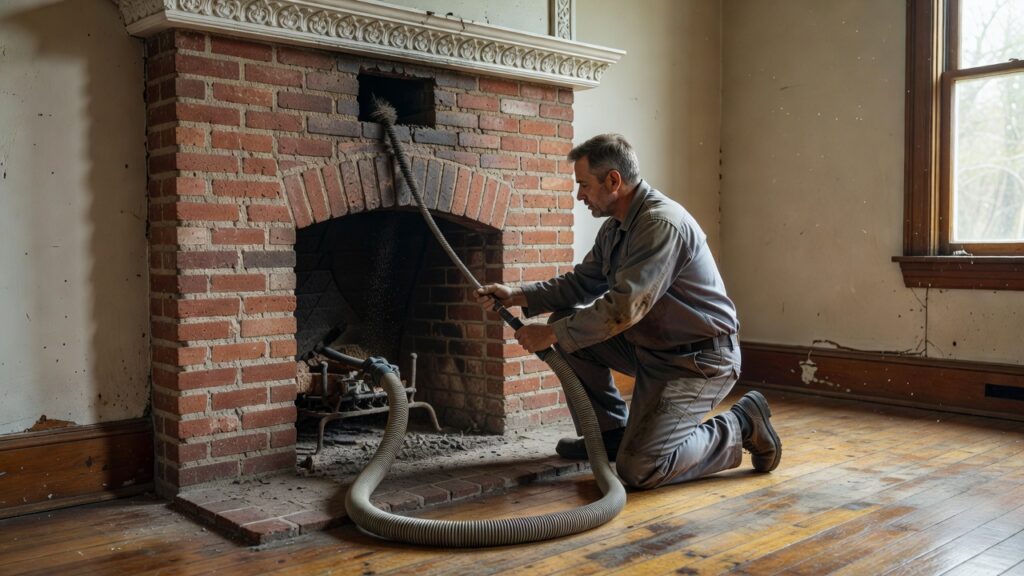
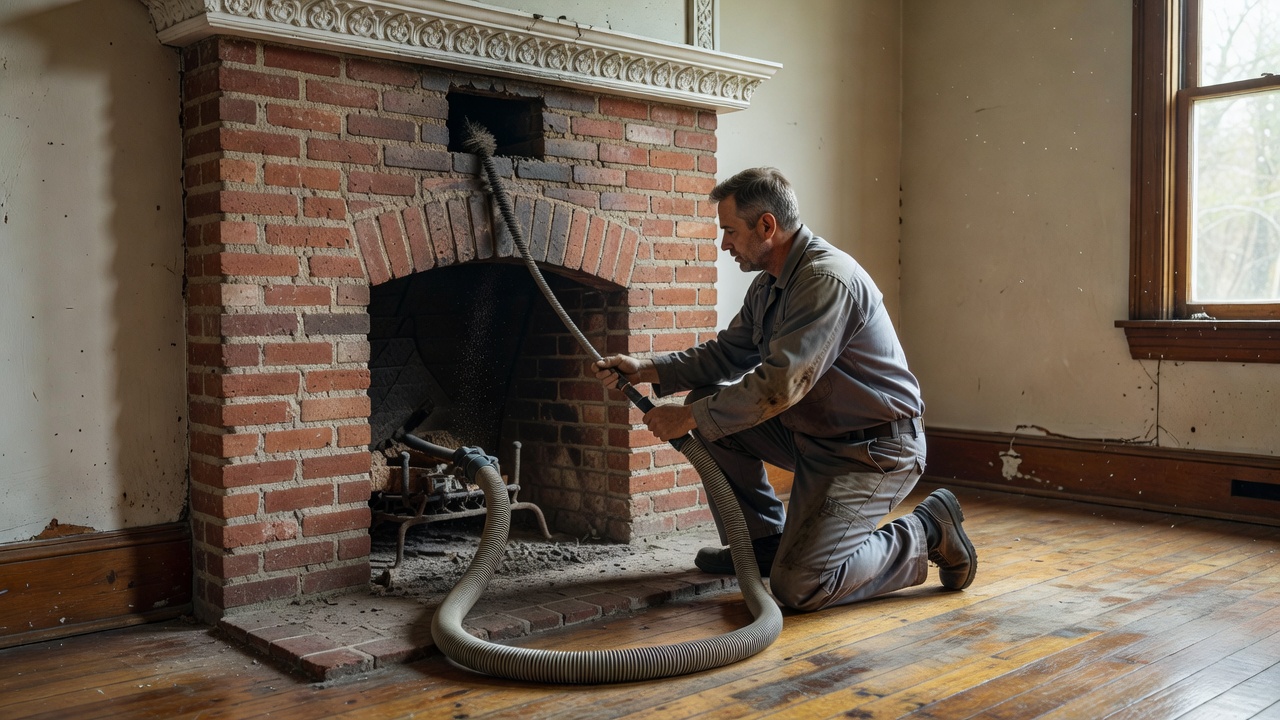
Before brushing begins, the technician should examine the accessible fireplace components and determine whether there are visible obstructions or signs of damage. Cleaning equipment should be appropriate for the flue material and type of deposits.
A professional chimney cleaning may include:
-
Protecting the surrounding fireplace area with drop cloths and suitable dust-containment equipment.
-
Removing soot and creosote deposits from the flue when cleaning is necessary.
-
Cleaning accessible areas of the firebox and smoke chamber.
-
Using appropriate brushes and vacuum equipment to control dust and debris.
-
Checking accessible portions of the damper and chimney interior.
-
Looking for visible cracks, deteriorated joints, and other signs of damage.
-
Examining accessible exterior components, including the chimney cap and crown.
-
Explaining the findings and recommending additional work when necessary.
Some contractors use top-down cleaning methods, while others work from the fireplace opening. The appropriate approach depends on access, equipment, and chimney configuration.
A camera examination may also be useful when evaluating the interior condition of the flue. However, a camera scan should not automatically be described as part of every routine cleaning unless the contractor specifically includes it in the service.
If a technician identifies a cracked tile, an offset joint, or substantial creosote buildup, ask for photographs or other documentation. Additional repairs should be explained and priced separately before you authorize the work.
Chimney Cleaning and Inspection in Elizabeth Neighborhoods
Elizabeth includes a variety of residential building types, from older attached homes to detached houses and multifamily properties. These different structures can have different chimney configurations.
Before arranging service, tell the contractor:
-
Whether you have a wood-burning fireplace, gas fireplace, wood stove, or heating appliance connected to a chimney.
-
Whether the chimney is masonry or factory-built, if known.
-
Whether the system has been cleaned or inspected recently.
-
Whether you have noticed smoke entering the room, water stains, unusual odors, or visible damage.
-
Whether the property has more than one fireplace or flue.
Homes with shared masonry structures require particular attention to the actual flue configuration. A shared chimney structure does not necessarily mean that neighboring appliances use the same flue. A professional should evaluate the system rather than assume how its passages are arranged.
What Is Included in Chimney Flue Cleaning?
Before booking, ask the company to explain exactly what its standard cleaning appointment covers.
A basic cleaning may include the removal of soot and creosote deposits from the flue, along with cleaning accessible fireplace components. Some companies also include a visual inspection and written summary.
Other services may be charged separately, including:
-
Camera examinations of the flue.
-
Level 2 chimney inspections.
-
Chimney cap replacement.
-
Crown and masonry repairs.
-
Flue liner repair or replacement.
-
Flashing repairs.
-
Additional cleaning for heavy or glazed creosote deposits.
Ask whether the quoted price includes inspection, cleaning, equipment, and cleanup. A written estimate helps prevent misunderstandings about additional charges.
How Often Should Elizabeth Homeowners Clean Their Chimneys?
The National Fire Protection Association recommends that chimneys, fireplaces, and vents be inspected at least once a year. Cleaning, maintenance, and repairs should be performed when necessary.
Annual inspection does not mean every chimney automatically needs annual sweeping. The cleaning schedule depends on the type of appliance, fuel, frequency of use, and amount of soot or creosote present.
For wood-burning masonry fireplaces, the Chimney Safety Institute of America provides guidance on removing soot and creosote as deposits approach or exceed 1/4 inch. Its guidance also addresses glazed deposits, which may require specialized removal methods.
Gas fireplaces and other gas appliances generally produce less soot and creosote than wood-burning systems. However, their venting components can still become obstructed or deteriorate. Follow the appliance manufacturer’s maintenance instructions and arrange professional inspection when needed.
If your fireplace has not been used for several years, have it inspected before lighting the first fire. Animal activity, moisture damage, and deterioration can occur even when a chimney is not being used.
Frequently Asked Questions About Chimney Flue Cleaning in Elizabeth, NJ
My Elizabeth home has an older masonry chimney that has never been lined. Is that a problem?
An older unlined masonry chimney should be evaluated by a qualified professional, but the absence of a modern liner does not automatically establish that the system needs replacement.
The chimney’s construction, condition, connected appliance, and applicable installation requirements all matter. A professional can assess the flue for damaged masonry, deteriorated joints, and other conditions that may affect its suitability for continued use.
If a furnace, boiler, or other appliance has been connected or replaced, the venting system should also be evaluated against the appliance manufacturer’s requirements.
Ask the technician to explain any liner recommendation and provide supporting documentation before approving replacement work.
Could heavy rain or flooding damage my chimney even if I haven’t used the fireplace?
Yes. A chimney can experience moisture damage even when the fireplace is not in use.
Water may enter through a missing cap, cracked crown, damaged flashing, or deteriorated masonry. Continued moisture exposure can contribute to efflorescence, spalling, damaged mortar joints, and deterioration of flue components.
If your property has experienced flooding or significant water intrusion, mention it when scheduling an inspection. The technician can evaluate accessible components and recommend further assessment if damage is suspected.
How often should a wood-burning fireplace be cleaned?
There is no single cleaning schedule that applies to every wood-burning fireplace. The frequency depends on how often the fireplace is used, the condition of the fuel, airflow, and the amount and type of deposits inside the flue.
The recommended approach is to arrange an inspection at least once a year and clean the chimney when the inspection indicates that cleaning is necessary.
Even fireplaces used only occasionally should be inspected because blockages, animal activity, and deterioration can develop without regular use.
Do gas fireplaces need chimney flue cleaning?
Gas appliances generally produce less creosote than wood-burning fireplaces, but their venting systems still require appropriate inspection and maintenance.
The appliance manufacturer’s instructions should guide routine servicing. A professional can check for obstructions, deterioration, and other conditions that may interfere with proper venting.
Schedule Chimney Flue Cleaning in Elizabeth, NJ
Regular chimney inspections and appropriate cleaning help homeowners identify soot and creosote buildup, blockages, and deterioration. Having the system evaluated before regular fireplace use can also provide time to address problems before the heating season.
Roselle Chimney serves Elizabeth and surrounding Union County communities, including Roselle, Linden, Cranford, Union Township, and Hillside. Contact the company to ask about chimney cleaning, inspection options, service availability, and pricing.
Call Roselle Chimney or use the contact form to request an appointment for chimney flue cleaning in Elizabeth, NJ.
Related from Roselle Chimney: Chimney Cleaning County Services from Roselle Chimney — Your Union Cou · Chimney Flue Cleaning Cranford in Roselle, NJ