
Essential Chimney Cleaning Roselle NJ: 2026 Guide for Rahway Residents
Every fall, before the first real cold front rolls through Union County, our phones start ringing steadily from Rahway. Homeowners want to know what chimney cleaning Roselle NJ actually involves not the sales pitch version, but the honest, start-to-finish picture. This guide gives you exactly that.
Last November, a homeowner on Milton Avenue in Rahway called us after her gas insert had been running fine all summer, but the first wood fire of the season filled her living room with a faint haze. She assumed the chimney just needed a quick sweep. What we found was a partially blocked flue collar, a heavy coating of creosote near the smoke chamber, and a cracked terra-cotta liner tile she had no idea existed. The cleaning took about ninety minutes. The liner repair took another visit. She was glad she called before burning another fire.
That kind of outcome is preventable when you understand what the job covers from the moment, we arrive to the moment we pack up. Here is what you should expect, step by step.
Before You Start: What to Do Before the Crew Arrives
Clear the area around the fireplace. Move furniture, rugs, and anything sitting on the hearth at least three feet back. We bring drop cloths and a HEPA-rated vacuum, but some fine dust can still drift, especially in older Rahway homes with open brick surrounds. If you have a wood stove insert, make sure the last fire was at least 24 hours prior, so the firebox is cool to the touch. Let us know upfront whether you burn mostly hardwood, softwood, or a mix that tells us what degree of creosote buildup to prepare for before we even open the damper.
Step 1 — The Visual Assessment Before Any Tool Touches the Flue
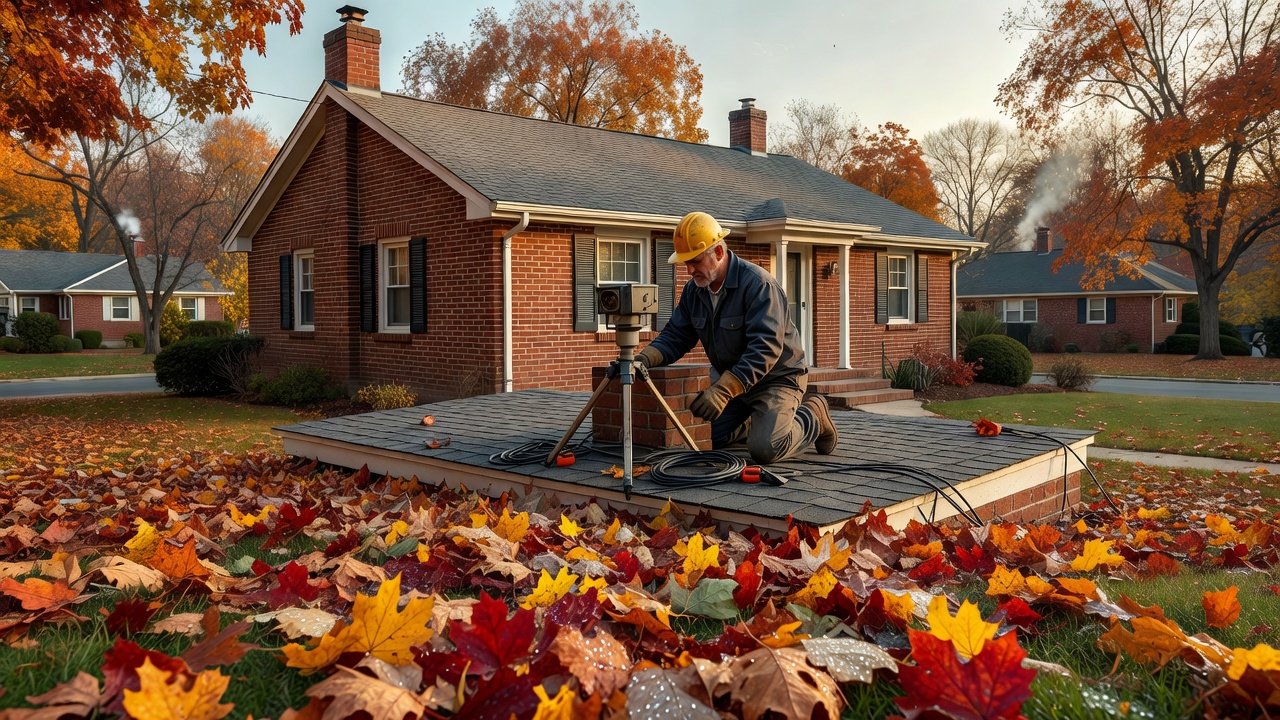
We start outside. One technician walks the roofline and checks the chimney cap, crown, and top few courses of masonry. In Rahway specifically, we see a lot of older clay-cap crowns that have cracked over years of freeze-thaw cycles. Missing mortar joints at the top are common on homes built in the 1950s and 1960s that have never had a full repoint. We note those before going any further.
Inside, we open the damper and use a flashlight to do a rough visual of the smoke shelf and lower flue. This is not the formal Level 1 or Level 2 inspection that involves a camera, but it tells us what we are walking into and whether we need to change the plan. According to the National Fire Protection Association (NFPA 211), chimneys, fireplaces, and vents should be inspected at least once per year and cleaned when necessary to reduce fire risk. Most Rahway homeowners we work with are on an annual schedule, which is exactly right.
Step 2 — Sealing Off the Firebox
Before any brush goes up the flue, we seal the firebox opening with a dust barrier — typically a zipper panel or a tightly taped poly sheet. Our vacuum attaches directly to this barrier so that negative pressure pulls debris into the machine rather than into your living room. This step matters more than most homeowners realize. A chimney sweep without proper containment is going to leave a fine layer of ash and creosote dust across your floors regardless of how careful they are. If a company quotes you a sweep and shows up without containment equipment, that is a red flag.
Step 3 — Brushing From the Top Down
The actual sweeping almost always runs from the chimney crown downward. We use polypropylene or wire-bristle brushes sized to your specific flue dimensions a six-inch round liner gets a different brush than an eight-by-twelve rectangular tile flue. Sections of flexible rods connect as we work toward the firebox. The debris — ash, soot, and any creosote falls to the smoke shelf and the firebox floor, where the vacuum captures it continuously.
The Chimney Safety Institute of America (CSIA) reports that failure to clean chimneys is one of the leading causes of home heating fires in the United States, accounting for thousands of incidents annually. Creosote is the specific culprit. The CSIA classifies it in three degrees, with third-degree buildup a glazed, tar-like coating — requiring immediate professional removal because standard brushing will not touch it. We have found third-degree creosote in flues as close as two miles away in Elizabeth and Linden, almost always in homes where the fireplace was used heavily but never cleaned.
Step 4 — Cleaning the Smoke Chamber and Firebox
The smoke chamber that corbelled section that funnels smoke from the firebox throat up into the flue — collects a surprising amount of glazed creosote on its angled walls. We hand-brush this area separately, which takes extra time but makes a real difference. Then we clean out the firebox itself: sweep the floor, brush the back wall and side jambs, and remove all collected debris from the smoke shelf above the damper. The smoke shelf is the flat ledge just behind the damper plate. Leaves, bird nesting material, and compacted soot accumulate there and restrict airflow even when the flue above is clean.
Step 5 — The Camera Inspection
Once the flue is clean, we run a camera inspection. A clean flue shows defects that heavy creosote was masking. Cracked liner tiles, mortar joint failure, offset flue sections, and spalling brick are all common findings in Union County homes, particularly in Cranford and Clark where we work frequently alongside Rahway-area calls. The camera footage is recorded, and we walk you through it on-site. You should never accept a “looks good” verbal report without documentation.
The U.S. Fire Administration notes that heating fires peak in December and January, making pre-winter chimney service critical for homeowners in cold-weather states like New Jersey. Getting the camera inspection done in September or October means any repair work has time to be scheduled before you need the fireplace regularly.
Step 6 — Reviewing Findings and Next Steps with You
We go over everything we found before we leave your driveway. If the flue is clean and structurally sound, we say so plainly and hand you a written service record. If we found a cracked tile or a deteriorating crown, we explain it in plain language what it means for safety, what the repair involves, and a realistic cost range. We serve Rahway, Roselle, Roselle Park, Kenilworth, and the surrounding communities, so we are not flying in from out of the area to upsell you on work you do not need. Our reputation in this part of Union County depends on honest assessments.
Step 7 — Scheduling the Right Follow-Up
A cleaning is maintenance. It is not a substitute for structural repair when repair is needed. If we identify a damaged liner, we will schedule a separate appointment for that work typically a liner replacement using a stainless-steel insert or a poured refractory system, depending on your flue configuration. If the cleaning revealed nothing urgent, we note a recommended return date, usually twelve months out, and flag any items to watch between now and then, such as a cap that is showing early rust or a crown with hairline cracks that are not yet structurally significant but worth monitoring.
Troubleshooting Tip: What to Do If You Smell Smoke After a Recent Cleaning
Occasionally a homeowner calls us a week after a cleaning to say there is still a faint smoke odor in the house. Almost always, the cause is one of three things: a damper that is not seating fully closed, a negative pressure issue pulling outdoor air down the flue, or residual odor baked into old brick that comes out when the house heats up. None of these mean the cleaning was done wrong. A damper seating issue is a quick fix. Negative pressure common in tightly insulated homes in Westfield and Union usually needs an outside air kit or a top-mounted damper to resolve. Call us and we will walk through it with you over the phone before scheduling a return visit.
Ready to Schedule Chimney Cleaning in Rahway or Anywhere in Union County?
Our team works throughout Rahway, Roselle, Elizabeth, Linden, Kenilworth, and the surrounding Union County area. We are not a national franchise we are a local crew that has worked on hundreds of chimneys in these neighborhoods and stands behind every job with a written service record. If your chimney has not been cleaned and inspected this year, now is the right time, before the heating season is fully underway. Call Roselle Chimney to schedule your appointment. We will give you a straight answer, a fair price, and a clean flue.
Frequently Asked Questions
How long does a chimney cleaning take for a typical Rahway home?
For most single-flue fireplace systems in Rahway, the cleaning and basic inspection runs between 60 and 90 minutes. If we find significant creosote buildup, if there are multiple flues, or if we are running a full camera inspection at the same time, plan for closer to two hours. We do not rush the job to fit a tight schedule if something needs extra attention, it gets it.
Is chimney cleaning messy? Will it leave dust all over my house?
With proper containment a sealed firebox barrier and a HEPA vacuum running throughout the sweep the mess is minimal. You may notice a very faint dust smell in the room for an hour or two after we leave, but you should not find soot on your furniture or floors. If a company does not use containment and a vacuum system, they should not be sweeping inside your home.
How often should Rahway homeowners get their chimney cleaned?
Once a year is the standard recommendation, and it applies whether you use the fireplace twice a season or every weekend. The annual visit catches structural problems early, not just creosote. If you burn more than three cords of wood in a season or use primarily softwood like pine, we may recommend a mid-season check as well. Gas fireplace flues still need annual inspection even though they produce far less creosote than wood-burning systems.
Related from Roselle Chimney: Smart Chimney Cap Installation Roselle NJ · Affordable Chimney Cleaning Union County NJ