
Published October 28, 2026
Fireplace Cleaning Roselle NJ: Best Time to Book & What Waiting Costs You
For most Roselle homeowners, the best time to schedule fireplace cleaning is late summer or early fall, before the heating season starts. Booking between July and September keeps you ahead of the rush, lets our team catch problems while repairs are still minor, and means your fireplace is ready the first cold night you want to use it.
We get calls every year from homeowners in Roselle, Roselle Park, and Elizabeth who waited until November and couldn’t get on the schedule before December. By then, some of them had already been running their fireplaces without knowing there was a problem. That’s the situation this post is designed to help you avoid.
Below are the questions we hear most often about fireplace cleaning in Roselle, NJ, answered as straight as we can.
Frequently Asked Questions About Fireplace Cleaning in Roselle, NJ
How Often Does a Fireplace Actually Need to Be Cleaned?
Quick answer: Once a year, at minimum, regardless of how often you use it.
According to the National Fire Protection Association (NFPA 211), chimneys, fireplaces, and vents should be inspected at least once per year and cleaned when necessary to reduce fire risk. That standard applies whether you burned five cords of wood last winter or lit three fires for ambiance. Even a fireplace that sat unused all season can collect moisture, debris, and animal nesting material inside the flue. We’ve pulled bird nests and dead squirrels out of chimneys on Chestnut Street in Roselle that the homeowners had no idea were there. An annual cleaning catches those problems before they become dangerous.
What Is the Best Time of Year to Book Fireplace Cleaning in Roselle, NJ?
Quick answer: July through September is the window we recommend most.
Spring and summer are slower for us, which means you get more scheduling flexibility and faster turnaround on any follow-up repairs. By October, our calendar fills up across Roselle, Cranford, and Westfield as homeowners realize they haven’t had service done yet. The U.S. Fire Administration notes that heating fires peak in December and January, and pre-winter chimney service is considered critical for homeowners in cold-weather states like New Jersey. Booking in summer puts you well ahead of that peak. You also get any needed repairs done while the weather is still warm enough for masonry work to cure properly.
What Happens If I Skip a Year of Fireplace Cleaning?
Quick answer: Creosote builds up, and the longer it accumulates, the more dangerous and expensive the situation gets.
The Chimney Safety Institute of America (CSIA) classifies creosote in three degrees, with third-degree buildup requiring immediate professional removal. First-degree buildup is a routine cleaning. Second-degree takes longer and costs more. Third-degree can mean relining the flue entirely, which runs into the thousands of dollars. Last fall, a homeowner on Locust Avenue in Roselle called us after skipping service for three years. What should have been a standard cleaning turned into a full inspection, a level-two assessment, and a flue resurfacing job. She paid several times what an annual cleaning would have cost. Skipping a year rarely saves money over time.
How Much Does Fireplace Cleaning Cost in Roselle, NJ?
Quick answer: A standard chimney sweeping typically runs between $150 and $300 for most Roselle homes, depending on the system and its condition.
That range covers a wood-burning fireplace with a single flue in reasonably maintained condition. If the flue hasn’t been cleaned in several years, or if there’s heavy creosote buildup, the job takes longer and costs more. Gas fireplace cleaning is generally on the lower end. Oil-fired systems or those with serious blockages can push the price higher. We give homeowners in Linden and Union the same honest assessment we give Roselle customers: the quote we give before we start is the price you pay. No hidden fees added after the fact.
What Does a Fireplace Cleaning Actually Include?
Quick answer: A proper cleaning covers the firebox, smoke chamber, damper, and the full length of the flue.
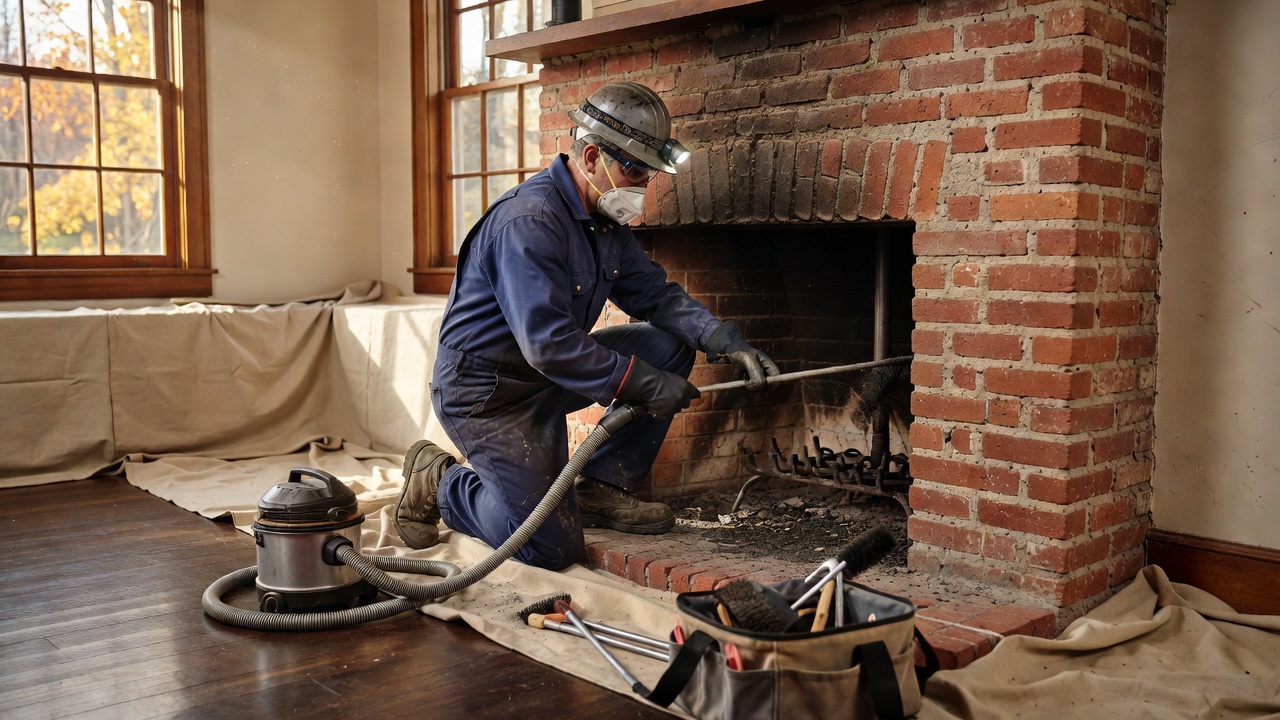
We start with a visual check of the firebox and damper, then use brushes and a commercial vacuum system to remove soot and creosote from the flue liner from top to bottom. We inspect the smoke shelf, the smoke chamber, and the condition of the liner while we’re in there. If we find cracks, spalling mortar, or other issues, we document them and go over the findings with you before recommending any additional work. Cleaning and inspection together usually take 45 minutes to an hour and a half, depending on the system. We protect your floors and furniture, and we leave the area clean.
Can I Clean My Fireplace Myself?
Quick answer: You can clean the firebox yourself, but the flue needs professional equipment and a trained eye.
Hardware stores sell chimney brushes and rods, and a homeowner can remove light surface soot from the firebox with the right tools and protective gear. The flue is a different situation. Without a commercial vacuum system, soot and fine particulate get pushed through the house. More importantly, a DIY cleaning gives you no information about the condition of the liner, the damper, or the mortar joints. The CSIA reports that failure to clean chimneys is one of the leading causes of home heating fires in the United States. That risk doesn’t come from skipping the surface sweep; it comes from not knowing what’s happening inside the flue. Professional service covers both.
How Do I Know If My Fireplace Needs Cleaning Right Now?
Quick answer: A few signs are hard to miss, and some are easy to overlook without a trained eye.
The obvious ones: visible soot or creosote buildup on the damper or firebox walls, a smoky smell in the room when the fireplace isn’t in use, smoke backing up into the house when you have a fire going, or a strong odor coming through the fireplace on hot humid days. The less obvious ones: a fire that’s harder to start than it used to be, or a damper that doesn’t open and close smoothly. According to the Consumer Product Safety Commission (CPSC), carbon monoxide from blocked or damaged chimneys sends thousands of Americans to emergency rooms each year. If you have any of those symptoms, don’t wait for fall. Call us now.
Does It Matter If I Have a Gas Fireplace Instead of Wood?
Quick answer: Yes, gas fireplaces still need annual inspection and periodic cleaning.
Gas produces less creosote than wood, but the flue can still collect debris, moisture, and nesting material. The burner components, gas logs, and venting all need to be checked annually. We service gas fireplaces throughout Clark, Rahway, and Kenilworth, and we see the same pattern: homeowners assume gas means maintenance-free and skip service for years at a time. When we do get in there, we often find pilot assembly issues, corroded components, or blocked vent terminations. A gas fireplace that isn’t venting correctly is a carbon monoxide hazard, not just an efficiency problem. Annual service keeps it safe and running as it should.
What If I Wait Until After the Holidays to Schedule?
Quick answer: You can, but you’ll likely have already burned a full season without knowing the condition of your flue.
January and February are when we hear from homeowners who burned wood or ran their gas inserts all through November and December and are now getting around to scheduling. By that point, the risk has already been there. If there was a crack in the liner or a heavy creosote deposit, it was present every time you had a fire. Post-season cleaning is still better than never, and it sets you up well for the following year. But it doesn’t undo the risk of a full heating season on an uninspected system. The timing that actually protects you is before the first fire, not after the last one.
Summary: Timing & Cost at a Glance
| Question | Short Answer |
|---|---|
| How often should I clean my fireplace? | Once per year, per NFPA 211 |
| Best time to book in Roselle | July through September |
| Cost of skipping service | Minor cleaning becomes major repair; costs multiply |
| Typical cleaning cost | $150 to $300 for a standard wood-burning fireplace |
| Does gas fireplace need cleaning? | Yes, annually |
| Can I DIY the flue? | No; flue requires professional equipment and inspection |
| Warning signs to act on now | Smoky smell, smoke backup, hard-to-start fires, odors |
| Risk of waiting until after the season | Full season of use on an uninspected system |
Ready to Schedule? Here’s How to Reach Us
We serve homeowners across Roselle, Roselle Park, Elizabeth, Cranford, Westfield, Clark, Linden, Rahway, Union, and Kenilworth. If your fireplace hasn’t been cleaned this year, or if you’re not sure when it was last serviced, we’re happy to take a look. Give Roselle Chimney a call or use the contact form on this site to request an appointment. We’ll give you a straight answer about what your system needs and what it costs before any work begins.
Questions We Hear From Roselle Homeowners
How long does fireplace cleaning take for a typical Roselle, NJ home?
For most single-flue wood-burning fireplaces in Roselle and the surrounding Union County area, a standard cleaning and inspection takes between 45 minutes and an hour and a half. Factors that add time include heavy creosote buildup, a flue that hasn’t been serviced in several years, or additional work like a smoke chamber cleaning or damper repair. We’ll give you a time estimate when you book.
Is fireplace cleaning in Roselle, NJ messy? Will soot get in my house?
A professional cleaning should leave your home clean. We use commercial-grade HEPA vacuums and drop cloths to contain soot and debris during the job. The vacuum runs throughout the cleaning process to capture fine particulate before it can spread. When we’re done, the area around your fireplace should look the same as when we arrived. If a company isn’t using proper containment equipment, that’s worth asking about before they start work.
Do I need a chimney inspection and a cleaning, or just one or the other?
You need both, and in most cases they happen together. Cleaning removes soot and creosote from the flue; inspection checks the structural condition of the liner, firebox, damper, and crown. One without the other leaves you with incomplete information. NFPA 211 calls for annual inspection, and the cleaning is what happens when the inspection shows buildup. We combine them into a single visit for most Roselle homeowners, so you’re not scheduling two separate appointments.
Related from Roselle Chimney: Chimney Cleaning County Services from Roselle Chimney — Your Union Cou · Chimney Flue Cleaning Cranford in Roselle, NJ