
Warning Signs You Need a Chimney Sweep Near Linden NJ Before It Gets Worse
If your chimney is showing any of the signs below, don’t wait for the heating season to sort itself out. Most of what we describe here has a straightforward fix when caught early. Left alone, the same problems can mean liner replacement, water damage, or a house fire. We’ve been finding these issues in Linden homes for years, and the homeowners who call us early spend far less than the ones who call us after something goes wrong.
Last January, a homeowner on Orchard Street in Linden called us after noticing a strong smoke smell in her living room even though she hadn’t used her fireplace in weeks. When we got there, we found a cracked clay tile liner packed with third-degree creosote and a damper that had partially collapsed. The furnace was venting through a shared flue. She was lucky the carbon monoxide detector went off before anything worse happened. That call came in February, which is exactly the time of year when we’re busiest across Linden, Rahway, Elizabeth, and the rest of Union County because people ignore warning signs until the heat is on full blast.
The U.S. Fire Administration notes that heating fires peak in December and January, making pre-winter chimney service critical for homeowners in cold-weather states like New Jersey. The signs below are the ones our crew actually looks for when we arrive at a job. Some you can monitor yourself. Others mean you should stop using your fireplace or furnace flue and call a professional the same day.
Signs You Need a Chimney Sweep Near Linden NJ Right Now
We’ve organized these by what you can actually observe, not by how scary they sound. Each one tells a different story about what’s happening inside a system most homeowners never look at.
1. A persistent smoky or burning smell when the fireplace isn’t in use
This is the sign that brought the Orchard Street homeowner to call us. If you smell smoke or a stale burning odor in your living space and the fireplace has been cold for days, creosote or soot is likely working its way back into the house through a draft reversal or a gap in the liner. Call a pro now. This is not a “keep an eye on it” situation, because it often means combustion gases are already moving through spaces they shouldn’t be.
2. Black staining around the firebox opening
A little soot on the glass is normal. Dark, spreading stains on the brick or mantel surround above the firebox opening mean the smoke isn’t drafting up the flue the way it should. The cause could be a blocked flue, a closed or stuck damper, or a chimney that’s simply too dirty to draw properly. Most homeowners try to wipe this off and assume the problem is cosmetic. It isn’t. Keep an eye on it if it’s minor and hasn’t spread, but schedule a cleaning and inspection before your next fire.
3. White staining (efflorescence) on the exterior brickwork
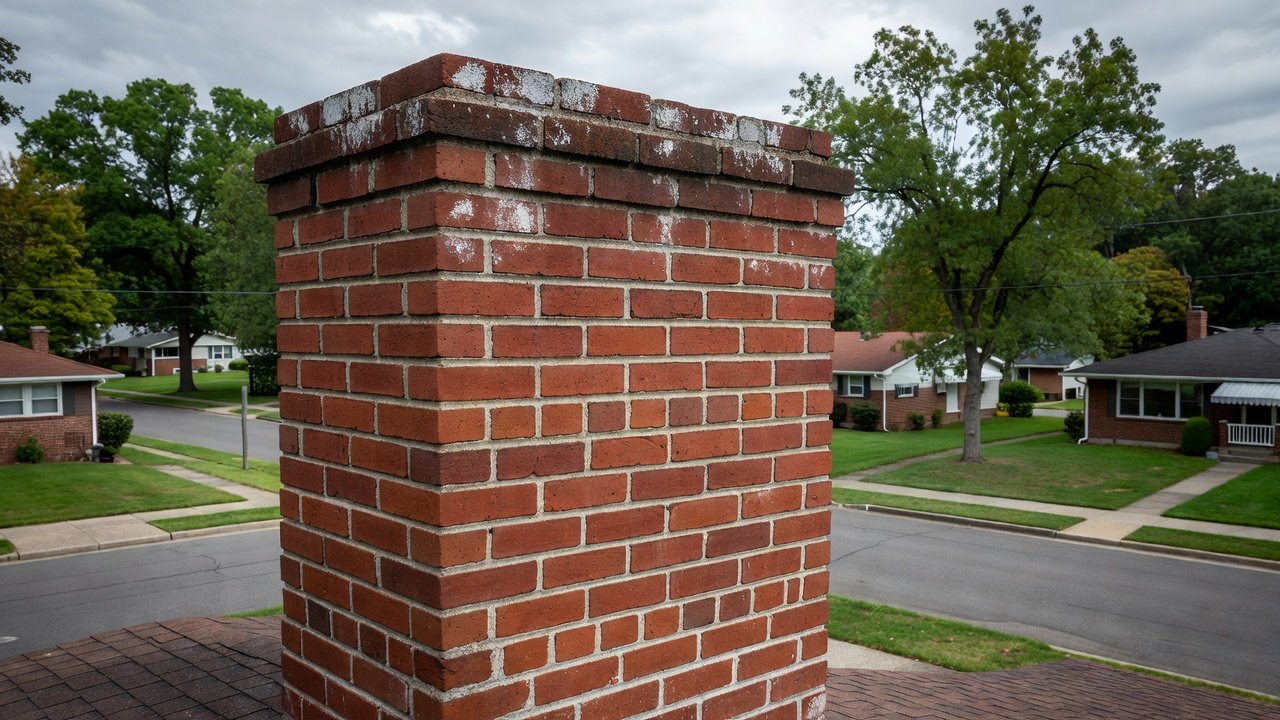
That chalky white residue on the outside of your chimney is salt being pushed to the surface by moisture moving through the masonry. It means water is getting in somewhere, whether through a cracked crown, a missing cap, or deteriorated mortar joints. We see this constantly on older homes in Linden and the neighboring blocks of Rahway. The staining itself isn’t the problem. The water intrusion causing it is. Keep an eye on it through one season if the staining is light, but have the source identified before winter.
4. Flaking or chunky debris in the firebox
If you open your firebox and find pieces of clay tile, chunks of mortar, or what looks like crumbled brick sitting on the floor, your liner is deteriorating. The CSIA classifies creosote in three degrees, with third-degree buildup requiring immediate professional removal, and liner damage often accompanies heavy creosote buildup. A damaged liner allows heat and combustion gases to reach the framing around your chimney. Call a pro now. Stop using the fireplace until someone inspects the liner.
5. A damper that’s hard to open or won’t seat properly
Dampers corrode, warp, and collect debris. If yours takes real force to open, or if you can feel cold air pouring in when it should be closed, that’s a problem on two fronts. A stuck damper can trap combustion gases. A damper that won’t fully close lets conditioned air out all winter and lets moisture and animals in. This is something you can confirm yourself by looking up into the firebox with a flashlight. Keep an eye on it if it opens and closes with some effort, but have it serviced before the season. If it won’t move at all, call us.
6. A strong, tarry, or oily smell coming from the fireplace in hot weather
Summer is actually when heavy creosote buildup becomes most obvious, because heat and humidity amplify the smell. If your fireplace smells like asphalt or an old campfire in July, you’ve got significant creosote accumulation. According to the Chimney Safety Institute of America, failure to clean chimneys is one of the leading causes of home heating fires in the United States. That smell in July is creosote. It will be a fire risk in November. Call a pro now, or at least schedule the cleaning before fall.
7. Visible gaps or crumbling mortar between chimney bricks
Stand in your yard and look at the top third of your chimney. If mortar joints are recessed, crumbling, or missing entirely, water is getting into those gaps and expanding with every freeze-thaw cycle. In Linden and Clark, where we work on a lot of post-war brick homes, this type of spalling can take down a chimney faster than most homeowners expect. Call a pro now if you can see gaps from the ground. That’s already significant.
8. Sounds of scratching, chirping, or movement inside the flue
Animals, usually birds or squirrels, get into uncapped flues. The scratching is obvious. What’s less obvious is the debris and nesting material they leave behind, which is a fire hazard and can block the flue entirely. The National Chimney Sweep Guild notes that a professionally installed chimney cap can reduce animal entry and moisture intrusion and extend chimney life by years. If you hear something in there, don’t light a fire. Call a pro now so the animal can be safely removed and a cap installed.
9. Carbon monoxide detector alarms when the furnace or boiler is running
If your CO detector trips near the furnace or in a room adjacent to your chimney, and there’s no other obvious source, the flue serving your heating equipment may be blocked or damaged. According to the Consumer Product Safety Commission, carbon monoxide poisoning from blocked or damaged chimneys sends thousands of Americans to emergency rooms each year. This is not something to diagnose yourself. Call a pro now, and if the detector is going off, get out of the house first.
10. You haven’t had an inspection in more than a year
This one has no visible symptom, which is the whole problem. The National Fire Protection Association (NFPA 211) requires chimneys, fireplaces, and vents to be inspected at least once per year and cleaned when necessary. A flue can look fine from the firebox opening and still have a cracked liner, a blocked cap, or a section of collapsed tile that won’t show up until something goes wrong. If you can’t remember the last time someone looked at your chimney, that’s your sign. Schedule the inspection.
What you can handle yourself vs. what genuinely needs a pro
We want to be straight with you on this. Homeowners can do a few things on their own. You can look into the firebox with a flashlight and note obvious debris or broken tile pieces. You can check the exterior brickwork from the ground for visible gaps or staining. You can test whether your damper moves. You can install a CO detector if you don’t already have one.
What you cannot safely do yourself is clean a flue, assess liner integrity from inside a flue, repair mortar joints at height, remove animals from a flue, or determine whether a CO leak is coming from your chimney system. Those jobs require the right equipment, liability coverage, and training. A shop vac and a YouTube video are not a substitute for a Level 1 or Level 2 inspection.
We’ve seen DIY chimney cleaning attempts that pushed creosote deeper into the flue, compacted nesting debris into a blockage, and left homeowners thinking the system was clear when it wasn’t. The cost of a professional sweep in Union County typically runs between $150 and $300 depending on the flue type and condition. That’s a lot less than a liner replacement, which can run $2,500 to $7,000 or more depending on the job.
Serving Linden and surrounding Union County towns
Our team works throughout Linden and the surrounding area, including Roselle, Roselle Park, Elizabeth, Rahway, Cranford, Clark, and Kenilworth. We know the housing stock in these towns well. A lot of Linden homes were built in the 1940s through 1960s, and those chimneys often have original clay tile liners that have been patched, modified, or ignored for decades. We’ve opened flues in Elizabeth and Rahway that hadn’t been cleaned in 15 years. We’ve found bird nests in Cranford and cracked crowns in Clark that homeowners had no idea were there.
If any of the warning signs above sound familiar, we’d rather help you catch it early than show up after the damage is done. Our inspections follow NFPA 211 guidelines and we’ll walk you through exactly what we find before any repair work is discussed.
Call Roselle Chimney or use our contact form to schedule a sweep and inspection. We serve Linden and all of Union County, and we can usually get to you within a week for routine appointments, sooner if you’re dealing with a CO alarm or visible liner damage. There’re no pressure and no upselling on work you don’t need.
Frequently Asked Questions
How much does a chimney sweep cost in Linden, NJ?
Most chimney sweeps in the Linden and Union County area run between $150 and $300 for a standard cleaning and Level 1 inspection. The price depends on the type of flue, how long it’s been since the last cleaning, and the extent of creosote buildup. If additional work is needed, like a crown repair or cap installation, that will be priced separately and explained before any work begins.
How often should a chimney be cleaned in New Jersey?
The NFPA 211 standard calls for at least one inspection per year, with cleaning done whenever buildup is present. In New Jersey, most homeowners who use a wood-burning fireplace regularly should plan on an annual sweep. If you’re using your fireplace less than a cord of wood per season, every other year may be acceptable, but an annual inspection is still the right call to catch liner cracks, moisture damage, and blockages early.
Is it safe to use my fireplace if I smell smoke in the house?
No. A smoky smell when the fireplace isn’t in use usually means combustion gases or smoke are moving back into the living space through a draft problem, a blocked flue, or a liner gap. Using the fireplace in that condition can worsen the problem and introduce carbon monoxide into the home. Stop using the fireplace and call a certified chimney professional for an inspection before lighting another fire.
Related from Roselle Chimney: Chimney Cleaning County Services from Roselle Chimney — Your Union Cou · CSIA Certified Chimney Sweep in Roselle, NJ