
Chimney Draft Problems in Roselle NJ: What’s Causing Smoke to Back Up Into Your Home
A bad draft can cost you more than comfort. Homeowners in Roselle who ignore smoke backing into the room often end up with creosote-caked flues, damaged dampers, and eventually a chimney professional telling them the liner needs relining at $2,000 or more. Catching chimney draft problems in Roselle NJ early almost always means a cheaper, faster fix.
Earlier this year, a homeowner on Locust Street in Roselle called us after her living room filled with smoke within minutes of lighting a fire. She’d used that fireplace every winter for six years without any trouble. Nothing obvious had changed. That’s actually the pattern we see most often: draft problems don’t usually announce themselves dramatically. They creep in, and by the time smoke is rolling into the room, there are often two or three things working against you at once.
Below, we’ll walk through the real diagnostic reasoning we use when we show up at a house with a draft complaint, the most common causes we find in Union County homes, and what the fix actually looks like from start to finish.
Why chimney draft works the way it does
Draft is driven by temperature difference. Hot combustion gases are lighter than the cold air outside, so they rise up the flue. When that physics gets disrupted, smoke has nowhere to go but back into the house. The disruption can happen inside the chimney, outside it, or somewhere else in the house entirely. That’s what makes draft diagnosis less straightforward than it looks.
According to the National Fire Protection Association (NFPA 211), chimneys, fireplaces, and vents should be inspected at least once per year and cleaned when necessary to reduce fire risk. In our experience, most of the draft problems we diagnose in Roselle and Roselle Park would have been caught, and likely prevented, during a routine annual inspection.
The six most common chimney draft problems we diagnose in Roselle NJ
1. Cold flue syndrome
Symptom: smoke pours into the room at the start of every fire, then clears up after 10 or 15 minutes. Cause: the air column inside the flue is cold and dense, so it actually pushes downward when you first open the damper. This is common in chimneys on exterior walls, which are standard construction in a lot of older Roselle and Elizabeth homes. The flue has no interior warmth to get draft started.
Fix: we warm the flue manually before lighting, using a rolled piece of newspaper held near the open damper. If that clears it, no structural work is needed. If warming the flue doesn’t help, or if the problem has gotten worse over years, we look for a related issue like a blocked flue or oversized firebox opening.
Can this be prevented? Yes. A top-mount damper keeps cold air from pooling in the flue between fires. We install them regularly on homes in Cranford and Clark where exterior chimneys are common.
2. Blockages in the flue
Symptom: restricted draft that gets worse over time, sometimes with visible debris falling into the firebox. Cause: bird or squirrel nests are the most frequent culprit we find, along with deteriorated clay tile pieces that have broken loose inside the liner. We’ve also found dead animals in flues more times than we’d like to count.
Fix: a CSIA-certified level 2 inspection with a camera lets us see exactly what’s in the flue and where it sits. From there, we remove the obstruction and inspect the surrounding liner for damage. The Chimney Safety Institute of America (CSIA) reports that failure to clean chimneys is one of the leading causes of home heating fires in the United States. Blockages don’t just cause draft problems; they’re a genuine fire hazard.
Can this be prevented? A properly fitted chimney cap stops animals and most debris from getting in. The National Chimney Sweep Guild (NCSG) estimates that a professionally installed chimney cap can extend chimney life by years and reduce long-term repair costs. We install stainless steel caps that hold up well in the freeze-thaw cycles common to New Jersey winters.
3. Negative air pressure inside the house
Symptom: draft is fine on milder days but terrible when the heat or a kitchen exhaust fan is running. The homeowner on Locust Street we mentioned earlier actually had this as part of her problem. Cause: modern and recently weatherized homes in Union, Westfield, and Kenilworth are tighter than they used to be. When exhaust fans pull air out, the house goes slightly negative, and the chimney becomes the easiest path for outside air to rush in, carrying smoke with it.
Fix: we test by cracking a nearby window an inch before lighting a fire. If draft improves immediately, negative pressure is the driver. The structural solution is an outside air kit, which draws combustion air directly from outdoors rather than from inside the living space. It’s a half-day job in most homes.
4. Damper problems
Symptom: reduced draft, difficulty controlling fire intensity, or a damper that won’t fully open. Cause: cast iron throat dampers corrode and warp over time. In homes we service in Linden and Rahway, we often find dampers that are sitting at 60 or 70 percent open because the operator plate has bent or the hinge has seized. Even that partial restriction can cut draft noticeably.
Fix: if the damper is partially open but still functional, we can sometimes free it and clean the seating area. If it’s warped or broken, replacement is the cleaner answer. Top-mount dampers are our standard recommendation because they seal at the top of the chimney, provide better draft control, and eliminate the cold flue problem described above.
5. Liner damage or improper liner sizing
Symptom: chronic draft problems that don’t respond to cleaning or damper work, often accompanied by a smoky odor that persists even without a fire burning. Cause: cracked clay tile liners allow draft to bleed out before it reaches the top, reducing the pressure differential that pulls smoke upward. Improperly sized flues are also common in older Roselle homes where the original liner wasn’t matched to the fireplace dimensions.
Fix: a video camera inspection tells us the condition of the liner. If there’s damage, relining with a stainless steel flex liner is the standard repair. It’s also the point where homeowners in Roselle Park and Elizabeth sometimes ask about repair versus full rebuild. If the masonry structure is sound and only the liner is failing, relining is almost always the right call from a cost standpoint.
6. Height and terminal location issues
Symptom: draft is inconsistent and seems to worsen when the wind picks up from a certain direction. Cause: chimneys that don’t clear the roof by at least two feet, or that sit near a roofline peak or dormer, can get caught in wind eddy currents that push air down the flue. This isn’t rare in the older residential stock throughout Union County.
Fix: extending the chimney height is one option. A directional wind cap or draft-inducing cap is often a less expensive first step. We assess both during an inspection and give homeowners the honest cost comparison before any work starts.
What to expect when we come out for a draft diagnosis
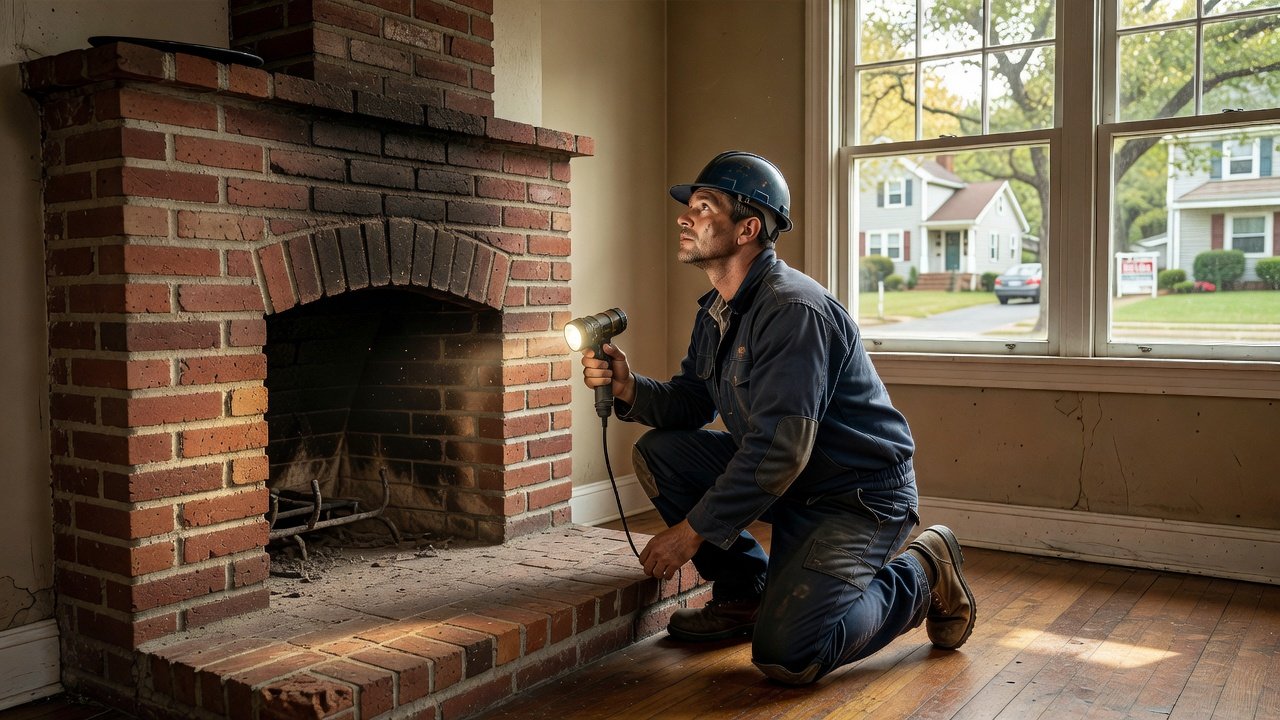
We start every draft service call with a visual inspection of the firebox, damper, and accessible flue. If the cause isn’t obvious from that, we run a camera up the liner. We also ask about the house: recent weatherization, new appliances, exhaust fans, and whether the problem is tied to weather or seasonal patterns. That context narrows the diagnosis faster than any single piece of equipment.
Most Roselle homeowners walk away from a diagnostic visit with a clear explanation of what’s happening and a written estimate for any needed work. Simple fixes like blockage removal or a top-mount damper can often be done the same day. Liner work takes longer to schedule but is typically completed in one visit.
If you’ve been dealing with smoke backup, a persistent odor, or a fireplace that just doesn’t draw the way it used to, our team serves Roselle and the surrounding Union County communities including Roselle Park, Elizabeth, Linden, Cranford, Union, Westfield, Clark, Rahway, and Kenilworth. Give us a call or send us a message through the contact page and we’ll get a technician out to take a look. We’d rather you understand exactly what’s happening with your chimney before you decide on anything.
Frequently asked questions about chimney draft problems in Roselle NJ
Why does my fireplace smoke when the heat is on but not at other times?
This is usually a negative air pressure issue. Your heating system or exhaust fans pull air out of the house, making the interior slightly negative relative to outside. The chimney then acts as an air intake, drawing cold outside air down and pushing any combustion gases back into the room. Cracking a nearby window before lighting a fire is a quick test. If that improves the draft noticeably, an outside air kit is typically the right fix.
How much does it cost to fix a chimney draft problem in Roselle?
Cost depends on the cause. A chimney cleaning and cap installation to resolve a blockage might run $200 to $400. A top-mount damper replacement is typically in the $300 to $500 range. If the flue liner is damaged and needs relining, that’s a larger job, generally $1,500 to $3,000 for most residential chimneys in the Roselle area. A diagnostic inspection is the starting point, and we provide written estimates before any repair work begins.
Is a chimney with draft problems safe to use?
It depends on the cause. Smoke backing into the living space means combustion byproducts, including carbon monoxide, are not leaving the house as they should. According to the Consumer Product Safety Commission (CPSC), carbon monoxide from blocked or damaged chimneys sends thousands of Americans to emergency rooms each year. We recommend stopping use of the fireplace until the cause is identified and addressed, and having working carbon monoxide detectors on every level of the home in the meantime.
Related from Roselle Chimney: Chimney Smoke Problem Fix in Roselle, NJ — Stop the Smoke, Protect You · Chimney Cleaning County Services from Roselle Chimney — Your Union Cou